
By Terry Sherwood
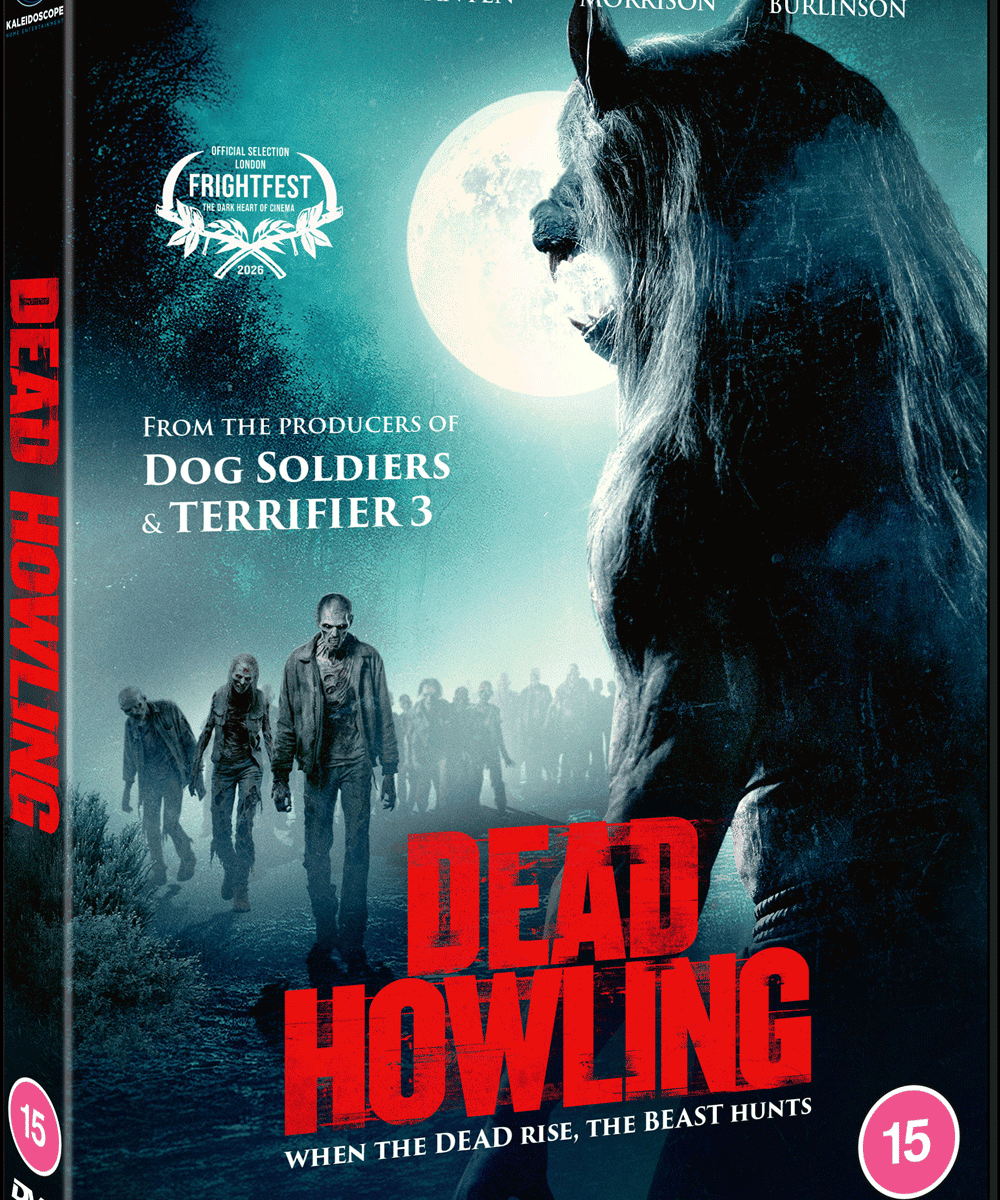
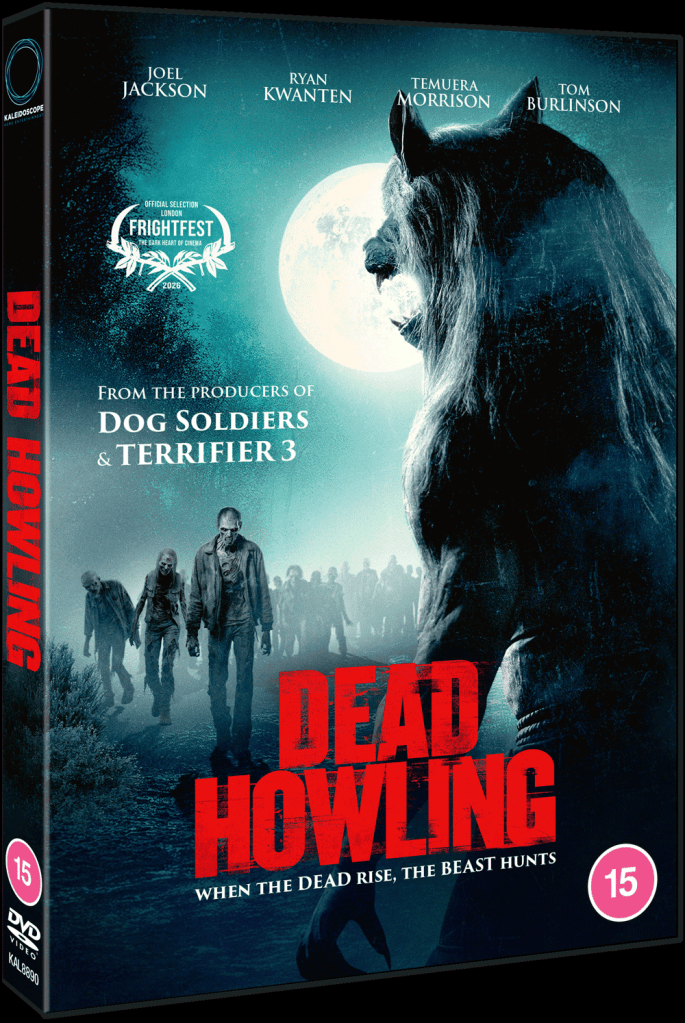
The pulp-driven premise of Dead Howling, Australian director John V. Soto’s 2026 horror film, is to take the familiar world devastated by a zombie virus, introduce a grief-stricken werewolf who hunts the undead for sport, then throw a handful of desperate survivors into the resulting bloodbath that sounds like the sort of exploitation-minded creature feature that understands survival horror’s most basic pleasures: monsters, mayhem, and the possibility that civilisation might be even uglier than the things trying to destroy it.
The picture features Joel Jackson, Ryan Kwanten, Temuera Morrison, and Tom Burlinson. Directed by Soto and filmed in Western Australia. Despite its enticing ingredients and brilliant outdoor vistas, the film gradually becomes an uneven survival thriller, struggling to maintain narrative momentum as its characters and storylines accumulate.
The story follows Carter (Joel Jackson) a biological scientist and now solitary werewolf whose family has been murdered during a devastating zombie outbreak. Consumed by vengeance, he injects himself with serum unleashing the monster so he can spends his nights slaughtering the living dead, transforming his grief into a violent pastime. He also burns a lot of calories , eats a lot of tinned baked beans and tears up a lot of t shirts Carter is interesting because he occupies an uncomfortable position between humanity and monstrosity. In a world where civilization has collapsed, his supernatural abilities make him a formidable predator, but his capacity for loyalty and sacrifice suggests that being a monster is not necessarily the same as being evil.
The film’s central premise inevitably recalls Dawn of the Dead, with its devastated world and desperate struggle to survive, while the prospect of fast-moving, relentless undead brings 28 Days Later to mind. These are familiar comparisons, but they establish the sort of atmosphere Dead Howling appears to be pursuing. The zombies are not simply slow-moving obstacles waiting to be dispatched. As the outbreak develops, the undead begin evolving, threatening to overturn whatever advantages the survivors believe they possess.
There is also a distinctly Logan’s Run quality to the search for sanctuary. Megan and Billy, two siblings played by Riley Stiles and Téa Heathcote-Marks, are desperate to reach a rumoured safe zone, give the narrative its familiar journey toward a supposedly protected destination. The sanctuary becomes more than a geographical objective; it represents the possibility that something resembling civilisation might still exist beyond the wasteland. Of course, in post-apocalyptic horror, promises of salvation rarely come without complications.
Carter reluctantly agrees to protect the siblings, and the trio sets off through a landscape populated by the undead and increasingly unpredictable human survivors. The werewolf-versus-zombie hook or claw becomes very similar to what Spock became in the third season of the classic series Star Trek. In an impossible predicament, Spock or the Vulcans would be given a unique ability to save the day; Carter is not another exhausted survivor clutching a shotgun and rationing ammunition. He possesses the strength and instincts of a supernatural predator, making the prospect of him tearing through the undead an appealing proposition for fans of creature-driven horror.
Yet the evolving zombies introduce a more disturbing possibility. The concept recalls some of the extreme, nihilistic territory explored in the extremely graphic Garth Innis comic series Crossed, particularly its interest in how an infectious catastrophe can turn ordinary social behaviour into something horrifying. The comparison is not necessarily about reproducing that series’ particular excesses; it concerns the broader idea that the collapse of society can unleash threats that are as psychologically disturbing as they are physically dangerous. As the undead change, the survivors can no longer rely on familiar rules of engagement. The enemy is becoming something new, and the old calculations of strength, speed, and safety may no longer apply.
This is where Dead Howling could have distinguished itself from the crowded zombie market. Carter’s monstrous nature contrasts with the behaviour of the supposedly civilised survivors he encounters. When desperation strips away social conventions, humanity’s darker instincts can become every bit as dangerous as a supernatural curse. The question of who deserves to be called a monster offers a potentially compelling emotional foundation beneath the carnage.
Unfortunately, the film does not consistently capitalise on its possibilities. As the journey progresses, the narrative becomes increasingly episodic, moving between encounters and survival situations without always establishing a convincing sense of continuity. Rather than building steadily toward a terrifying confrontation, the story sometimes feels as though it is assembling itself one chapter at a time.
Some characters, particularly Sandra played by Laura Maitland seem to have been added almost as an interlude much like the Curate in H G Well War of the World novel Their introductions can feel like additional chapters inserted into a book that was already moving in another direction. Instead of deepening existing relationships or meaningfully changing the group’s dynamics, these arrivals occasionally interrupt the narrative flow. In a survival film, every encounter should alter the balance of power, challenge the group’s trust, or force the protagonists into difficult decisions. When characters appear without sufficient development, the emotional stakes weaken, and the journey begins to resemble a succession of loosely connected incidents rather than a coherent struggle against extinction.
This is frustrating because the basic ingredients are so promising. A grieving werewolf, fast and evolving zombies, desperate travellers, and a sanctuary that may or may not offer salvation provide plenty of material for a ferocious horror film. The difficulty is bringing these elements together in a way that makes the violence consequential rather than merely repetitive.
Ultimately, Dead Howling has the makings of a solid piece of post-apocalyptic creature horror, but its uneven construction and length prevents it from consistently delivering on its premise. The echoes of Dawn of the Dead, 28 Days Later, and Logan’s Run, alongside the darker evolutionary possibilities suggested by Crossed, establish an intriguing collection of influences. However, a strong collection of ideas is not the same as a tightly constructed story.
For viewers drawn to supernatural carnage, the central prospect of a werewolf fighting an evolving zombie population remains appealing. Those seeking a disciplined survival thriller may find the episodic storytelling frustrating. Dead Howling wants to be a brutal tale of vengeance, a monster showdown, and a desperate journey toward salvation in a world that has lost its humanity. It does not always manage to make those ambitions work together.
The result is a film with plenty of bite in its premise, but a story that occasionally loses its way in the wasteland.

