

By Terry Sherwood
The modern horror genre is crowded with films attempting to blend psychological trauma, empty space, occult terror, folk ritual, and supernatural mystery into a single narrative. The Devil Whispered My Name struggles under the weight of those tropes. Directed by John Mathis and Emilia Cotella, the Argentinian sub-titled set film offers some genuine visual imagination and atmospheric dread, yet never quite know what it is.
The opening is a typical genre situation of a group of recent school graduates venture into the Argentine wilderness to celebrate their impending separation. Some are leaving home to pursue careers in larger cities and new opportunities, while others will remain behind. Their chosen farewell ritual is an Ayahuasca ceremony conducted without the guidance of a shaman. Predictably, what begins as youthful experimentation descends into catastrophe as they later find they have “opened a door”.
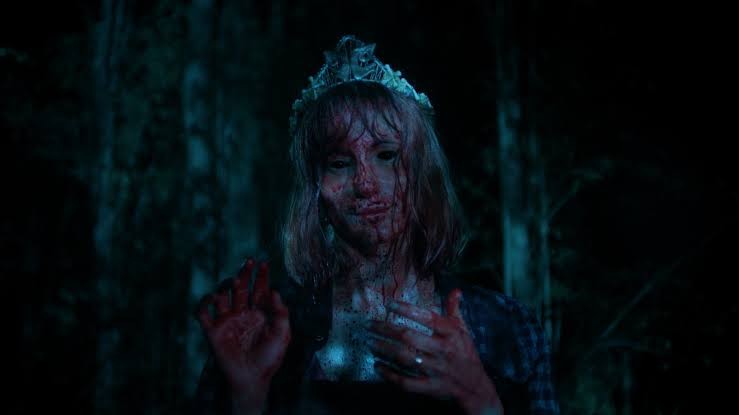
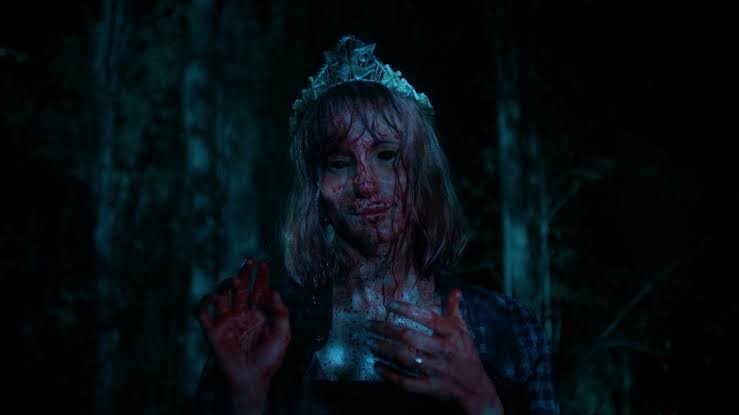
The morning after, Carla awakens bloodied and confused after ingesting the mixture on the ritual. Her best friend Maria, who had only recently revealed her pregnancy, has been brutally murdered. Arcane symbols carved into Maria’s body hint at dark supernatural forces.
The picture then jumps ahead ten years later where Carla has become a successful dancer in Buenos Aires and is preparing for a prestigious move to Paris. Yet she remains fragile, from that day as she is plagued by disturbing visions and dependent upon medication and therapy. When she learns that another member of the ill-fated Ayahuasca gathering has committed suicide, she returns to her hometown for the funeral. There she discovers the same mysterious symbol connected to both deaths, suggesting that the horrors of that night never truly ended.
There are elements of folk horror, possession narratives, occult conspiracy, psychological breakdown, flesh eating folk and the classic “evil small town” story. Unfortunately, the screenplay never fully commits to any one of them. Instead, it drifts between possibilities, offering intriguing clues without developing them into a satisfying narrative structure.
Long stretches of the film consist of Carla wandering through town, speaking with former friends, revisiting old locations, sleeping, or recovering from visions. These scenes are intended to build atmosphere and deepen character relationships. They tend to not have any supernatural influence or hint of except the wary look of a town resident who spots her staring at the now graffitied town sign before entering.
“Controlled” townspeople display unnerving behavior. Religious symbolism clashes with New Age spirituality. Demonic influences seem to lurk beneath the surface of everyday life. There are disturbing images involving opaque contact lenses, ritualistic violence, and grotesque transformations particularly at night with some wonderful moments involving the evil people carrying flashlights hunting or trying to block and exit road.
Clara Kovacic is the adult Carla or Carlita as she is called. She carries much of the film as a successful high-profile woman whom people revere and scorn at the same time who I s trapped between rational thought and something she cannot comprehend. Some wonderful moments with now grown childhood friends for that moment when they did the ritual which again should have contained a hint of what is to come. Because Carla already doubts her own perceptions due to years of hallucinations, the audience is never entirely certain whether the horrors unfolding around her are real. Oddly at no point is a religious figure in the form of a priest and nun or even a church consulted or shown as part of what is under attack.
Indeed, Carla’s tendency to repeatedly place herself in obvious danger becomes one of the film’s more frustrating aspects yet that is want many of these films do. Horror protagonists need not behave perfectly, but there comes a point where poor choices begin to strain credibility. Whether accepting invitations from suspicious acquaintances, ignoring warning signs, or remaining in clearly dangerous situations Best moment is when Carla hears her name whispered at night as she is trying to escape.
Visually, however, the cinematography captures both the beauty and isolation of rural Argentina. Dream sequences blend with reality, creating an atmosphere of constant uncertainty such as walking up with a corpse of a bloodied friend. Sound design is particularly effective, using whispers, distant voices, and subtle environmental noises to generate unease even during quieter scenes.
Comparisons to recent Argentinian horror successes such as When Evil Lurks are perhaps inevitable. While The Devil Whispered My Name shares an interest in rural possession and spiritual corruption, it lacks the narrative focus and escalating tension that made that film so memorable. Instead, it feels like a collection of fascinating ideas searching for a story strong enough to unite them.
Ultimately, The Devil Whispered My Name is a film rich in atmosphere but poor in discipline. Its directors demonstrate considerable visual talent and an admirable willingness to explore complex themes involving trauma, faith, destiny, and the occult. Yet the narrative never fully crystallizes, leaving viewers with striking images and unanswered questions rather than a truly satisfying horror experience. It is a respectable effort with moments of genuine power, but one that whispers intriguing possibilities more effectively than it delivers them.

