
Most movie monsters want to end you. The vampire, almost alone among them, wants company. That one difference explains why the figure has been horror’s leading romantic for more than a century, and why film-makers from Hammer to Jim Jarmusch keep returning to the same candlelit question: what would it mean to be loved by something that cannot die?
From the page to the castle
The romantic vampire was a literary invention long before it was a cinematic one. John Polidori, Lord Byron’s physician, published The Vampyre in the New Monthly Magazine in 1819, and his Lord Ruthven was modelled on the Byronic hero: aristocratic, charming and ruinous to know. Sheridan Le Fanu’s novella Carmilla followed in 1872, and Bram Stoker’s Dracula in 1897. By the time cameras arrived, the vampire was already a figure of drawing rooms as much as graveyards.
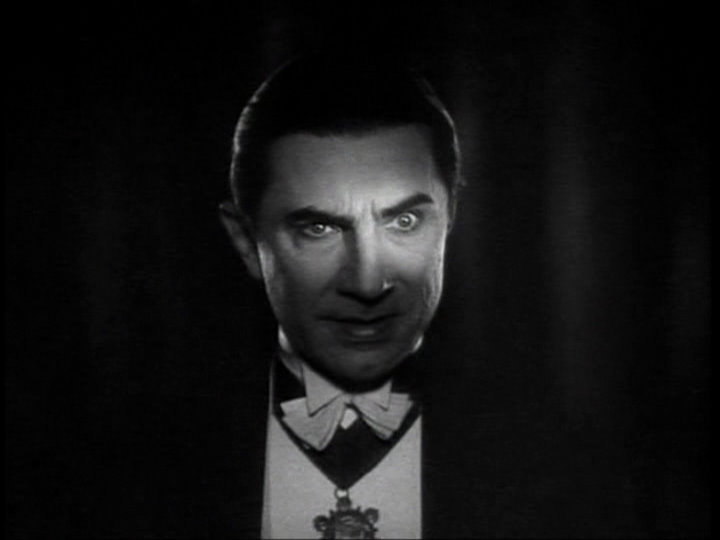
Early cinema took a while to catch up. F. W. Murnau’s Nosferatu (1922) borrowed so heavily from Stoker that it drew a plagiarism suit, yet Max Schreck’s Count Orlok is no one’s idea of a suitor. The change came in 1931, when Universal released Tod Browning’s Dracula, adapted from the stage play by Hamilton Deane and John L. Balderston. Bela Lugosi played the Count in evening dress, with courtly manners and an unhurried voice. The menace was still there, but now it arrived with an invitation.
Hammer finished the job. Terence Fisher’s Dracula (1958) cast Christopher Lee opposite Peter Cushing’s Van Helsing, and Lee’s Count was tall, quick and magnetic in a way the genre had not seen. From this point on, the vampire’s victims were not simply attacked. They were drawn in, and the films let the audience understand why.
Love never dies: the 1990s
If one film turned the subtext into the whole story, it was Francis Ford Coppola’s Bram Stoker’s Dracula (1992). Gary Oldman’s Count is a grieving prince, and Winona Ryder plays both Mina Murray and Elisabeta, the wife he lost centuries earlier. The poster line was “Love never dies”, and the production matched that operatic mood: at the 1993 Academy Awards it won for costume design, make-up and sound effects editing, with Eiko Ishioka taking the costume prize.
Two years later Neil Jordan’s Interview with the Vampire (1994), adapted from Anne Rice’s 1976 novel, moved the romance away from the castle altogether. Brad Pitt’s Louis and Tom Cruise’s Lestat are bound together across decades, and the film is less interested in fright than in melancholy, in what endless time does to affection, loyalty and regret.
That template, the brooding immortal and a love that outlasts lifetimes, has travelled well beyond cinema. You can see it in novels, in television and even in casino games: this Immortal Romance slot guide covers a vampire-themed game that Microgaming released in December 2011, built around four characters, Amber, Troy, Michael and Sarah, who each have a free spins round of their own. It is not tied to any film, but the gothic mood it trades on is one that horror fans will recognise at once.
The modern undead
Recent film-makers have kept the romance and changed the setting. Jim Jarmusch’s Only Lovers Left Alive, which played in competition at Cannes in 2013, stars Tilda Swinton and Tom Hiddleston as Eve and Adam, a couple whose relationship has already lasted several centuries. They live apart, in Tangier and Detroit, and the film is essentially a portrait of a very long marriage, full of music, books and weary tenderness.
Ana Lily Amirpour’s A Girl Walks Home Alone at Night, which reached festival audiences in 2014, was billed as a vampire western. Filmed in black and white and set in an Iranian ghost town called Bad City, it follows a lonely vampire who drifts into a tentative romance with a local man. It is a quiet film, and its most memorable scenes are about two people slowly deciding to trust each other.
Robert Eggers closed the circle with his Nosferatu, which opened in UK cinemas on 1 January 2025. Bill Skarsgård’s Orlok is as monstrous as Schreck’s, but Lily-Rose Depp’s Ellen Hutter is tied to him by a bond that began in a dream years before, one that dooms them both. Even the least romantic vampire of all now comes with a love story attached.
Why it endures
The appeal is not hard to trace. Vampire romance takes the things people fear most, death, loneliness and the passing of time, and imagines someone who has beaten all three and is still not content. The vampire offers forever and asks for everything in return. Horror has always been good at dressing up real anxieties in velvet and shadow, and no other monster wears them quite so well. As long as audiences enjoy being a little frightened by the idea of devotion without end, the undead will keep finding their way back to the screen.
18+ only. Treat any game as paid entertainment, never a way to make money. Free, confidential help 24/7: National Gambling Helpline, 0808 8020 133.

