

By Terry Sherwood
The modern Spanish film Talking to a Stranger or Hablando con extraños begins an unsettling parental moment of a bedtime story A young boy, Chris, asks his mother to come into his bedroom, repeatedly to come in and tell him a story before sleep. Silvia, a woman with a reassuring smile, obliges. What follows, however, is hardly suitable for a child, as it progresses through Addams Family humour to outright terror. Her tale concerns another child named Eddy, whose childhood is poisoned by his parents’ divorce, domestic violence, a playground accident and, ultimately, a mother-son suicide. It is a grotesque little narrative, delivered with the casual warmth of someone reading from a favourite picture book.
The film’s central unease: the danger lurking behind the familiar rituals of family life is established, and the audience is now in the hands of a filmmaker who manipulates images and sounds. This is a positive, as when it is done, it follows the plot even if, at times, it becomes a fallback device. Silvia is not Chris’s mother but a supernatural presence that has somehow entered his bedroom and his dreams. When his actual mother, Patricia (Gigi Saul Guerrero), arrives, Silvia disappears.
The Directors Adrián García Bogliano’s previous work includes the pseudo-werewolf film Late Phases, is familiar with the machinery of supernatural horror, but he is less interested in simply delivering another procession of things jumping out of dark corners. Talking to a Stranger’s real subject is the psychological devastation of grief. The supernatural becomes an extension of emotional trauma, a means of exploring what happens when the distinction between memory, dreams and reality begins to collapse. Familiar territory, yes, and often again fertile ground from demonic possession
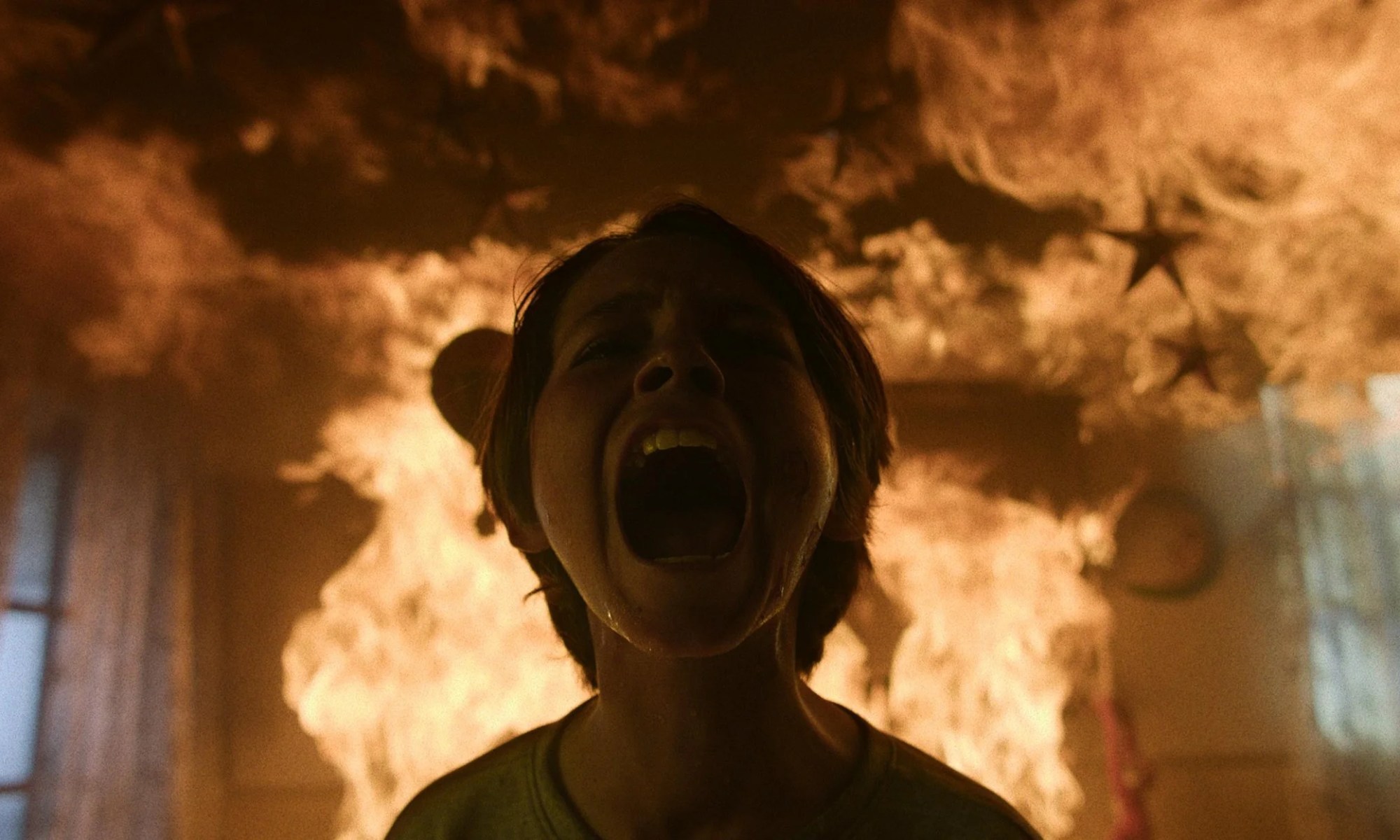
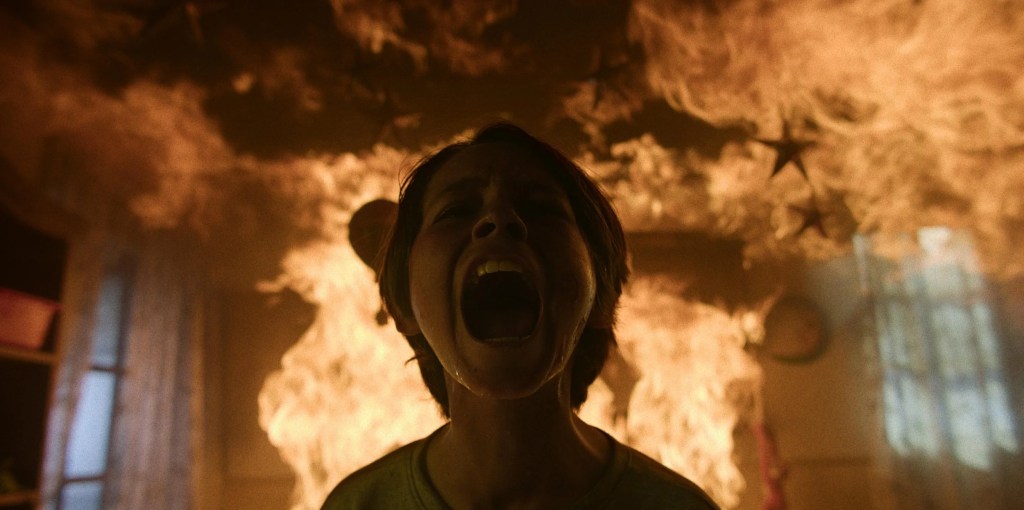
The tragedy arrives early. Following a disturbing nightmare, Chris dies in an agonising domestic accident, leaving his heavily pregnant mother helpless and unable to reach him. The incident is presented with an almost unbearable sense of inevitability. A misplaced toy aeroplane shows up in the background of moments and is also in a plane watched by Andrés (Eugenio Rubio), who is Patricia’s husband. The toy’s locked door and a series of seemingly insignificant household circumstances combine to produce an irreversible catastrophe.
Several years later, Patricia remains imprisoned by the event. Her husband, Andrés , a sound engineer, attempts to maintain some semblance of normal family life, lovingly attends to his wife descends further into grief, guilt and psychological disorientation. He is trying to understand each twist, each moment, each reason for some odd behaviour. Patrica consistently replays the death of Chris, and, most importantly, that they are going to be together forever. Voices in her head and sightings only she can see constantly reaffirm this. Their surviving daughter and the younger child born after Chris’s death are reminders of the life that continues around Patricia, even as she remains emotionally attached to the child she has lost.
Andrés begins recording the strange noises and sleep-talking occurring in their house. What initially appears to be a medical or psychological problem gradually takes on a more sinister dimension. Patricia experiences visitations, disturbing dreams and encounters with what appears to be her dead son. Like in William Friedkin’s The Exorcist, mental health professionals and medicine offer little relief, while an unconventional hypnotherapist who can hear sounds that are not available to the human ear becomes involved in an increasingly desperate attempt to understand what is happening.
We are never entirely certain whether we are witnessing supernatural interference, psychological collapse or some disturbing combination of both. As Patricia herself admits, she no longer knows what is real. The film uses this uncertainty effectively, allowing ordinary domestic spaces to become threatening territories where the past refuses to remain buried.
However, the film belongs overwhelmingly to Gigi Saul Guerrero. Best known for her work behind the camera, Guerrero delivers a remarkably committed performance as a woman whose maternal instincts have become entangled with obsession and self-destruction. Patricia is not simply a grieving mother. She is alternately affectionate, volatile, frightened, manipulative and desperately vulnerable. She wants to recover her son, but in doing so becomes increasingly blind to the needs of the living people around her.
The film’s treatment of motherhood is made to be a source of dread. Patricia’s grief is understandable, even heartbreaking, yet it gradually becomes destructive. Her love is genuine, but it has become a doorway through which something monstrous can enter, unlike the conventional Ouji board or object. The harrowing birth sequence is in the bathtub, and what happens after is brilliantly unsettling, all done without the usual mechanical child and effects.
Visually and thematically, Talking to a Stranger occasionally recalls Mario Bava’s Shock, particularly in its unsettling suggestion that childhood innocence can suddenly acquire a terrifying adult face. There are also echoes of the Mexican legend of La Llorona, the grieving mother whose loss transforms her into a figure of supernatural menace.
Ultimately, this is a film about the terrible persistence of loss. Its ghosts are not simply supernatural visitors but manifestations of the emotional wounds families carry behind closed doors. The film’s most frightening suggestion is that even the happiest household may contain the beginnings of its own nightmare. Sometimes you can’t banish the demons no matter how hard you try or how righteous the cause. Its final horror lies not merely in the possibility that the dead can return, but in the terrible price the living may pay when they cannot let them go. Mexican horror without zombies, guns, or wrestlers, right up there with the brilliant Issa López 2017 film Tigers Are Not Afraid. Well worth an excursion.

