

By David Dent
Galicia, Spain, 1976: a year after the death of General Franco. Miguel (Miguel Lago Casal), formerly a conscripted soldier, now a medical examiner is, like many men of his age, attempting to readjust to life following the Franco regime and the Spanish Civil War in which he fought as a young man; it may have happened decades previously, but the emotional wounds of the conflict still run deep.
As we meet him Miguel and his wife Neves (Lucía Veiga) are awaiting the arrival of their daughter Diana (Paula Gallego) and her boyfriend, soon to be husband, the bookish Antonio (Daniel Arias). But there’s a sense of unease hovering over the homecoming; Miguel’s friend, neighbour and soldier colleague Julio (Antonio Durán ‘Morris’) has not readjusted as well to civilian life; a heavy drinker, he has become preoccupied with being stalked for something he did during the war. Julio telephones Miguel’s house incessantly, believing himself in imminent danger.
The near constant phone calls punctuate growing tensions within the household, principally revolving around Diana, pregnant by Antonio without being married (this is Spain in 1976 after all) and being unhappy in the relationship.
While the rest of the family feel that Julio’s ravings are those of a madman, it’s clear that Miguel feels there’s something behind his friend’s persecution. A peruse of his vast book collection confirms the worst; the encroaching threat, which has already reached Julio and a local policeman, is nothing less than the Santa Compañan aka ‘The Holy Company’: a mythical, ritualistic procession of the damned, seeking out those guilty of past crimes.
While early scenes in Victor Català’s first feature suggest the hooded menace of the Knights Templar from the ‘Blind Dead’ franchise of the 1970s or, with their mist shrouded arrival, the drowned sailors of John Carpenter’s 1980 movie The Fog, the revenants of They Always Come at Night (I prefer the film’s original title los que vienen, literally ‘Those to Come’) have a much more specific purpose even if they are the stuff of legend.
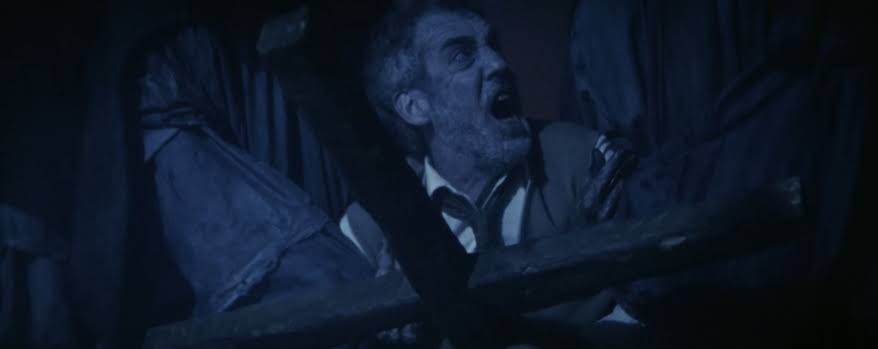
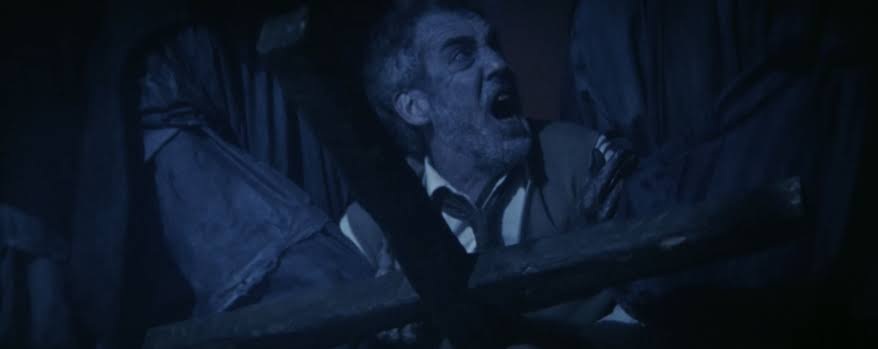
The film wisely hides the physical horror away until the last quarter hour of its slender 81 minute run time, favouring instead the slow build up of tension within Miguel’s house, convincingly acted, and with the 1976 time period very believably and claustrophobically rendered via the production design. Diana’s father’s revelations about his military past make the threat inside the home as palpable as the encroaching spectral army; the legacy of the Franco regime here is given physical and emotional form. A very impressive debut from Català.
They Always Come at Night screened as part of Grimmfest 2026.

