

By David Dent
The untimely death at 61 of director Justin Hardy means that Wrath of the Gods stands as his epitaph.
It’s particularly poignant in that the film completes the ‘Wicker Man’ trilogy, started by his father, the late Robin Hardy back in 1971 with the original The Wicker Man, and Robin’s follow up, The Wicker Tree, in 2011.
You can argue – as many have – whether both of Hardy pere’s movies could be called ‘horror films’; I think of them more as films about communities attempting to retain their unity and traditions in the face of progress and outsider intervention. Certainly WotG fits into this category.
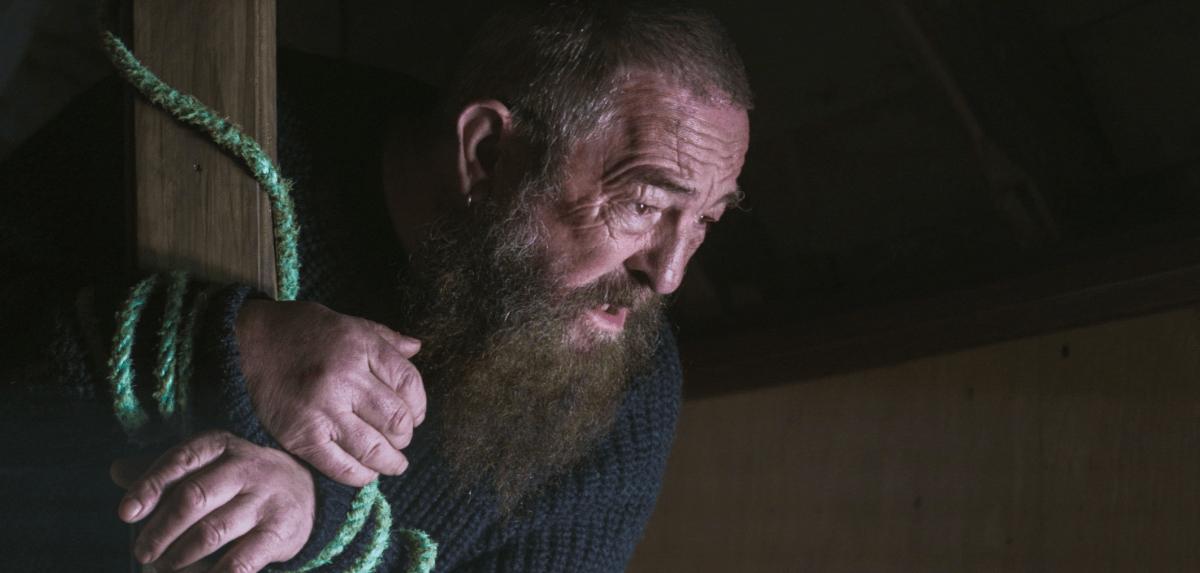
Outsider Anna (Christiane Schaldemose), who is Norwegian, travels with her young daughter Gudron (Martha Robinson) to the remote fictional Scottish island of Hel (in reality the Shetland Islands) after her ex, Ingram (Jamie Rhodes) took his own life there. She’s an unwelcome face in a community which closes ranks to contain its own demons, not least Ingram’s parents, taciturn Tulloch (Francis Magee) and his wife Maeve (Lynsey Rendall) with whom she’s staying.
The disappearance of a local girl sparks suspicion and fingers gently point in Anna’s direction, although the village seems full of characters who could be equally responsible; things change when Gudron disappears too. Anna, whose stresses make her turn to the bottle, forms a friendship with another outsider, Joy (Dawn Jessica Douglas), curator of the local folk museum; she explains the intersection of ancient beliefs between the islanders and those of the next nearest landmass, Norway, suggesting that there might be a supernatural explanation for the disappearance.
Hardy’s film is by its very nature wedded to its antecedents, so a lot of WotG feels thematically familiar. The integration of professional and amateur actors, rugged landscape locations, and authentic footage of islander celebrations (Hardy filmed the Shetlands Up Helly Aa firelit procession) give the film a much-needed authenticity. The story itself is both slight and fractured, the elements hanging together a little awkwardly. It’s a more moral end to the trilogy (people who get theirs deserve it) but isn’t quite equal to the sum of its parts.

