
By Simon Thompson
Writer/director Yanis Koussim’s Roqia is a deliberate and atmospheric exorcism based horror movie, that, while containing some interesting ideas, didn’t fully come together in the way that I had hoped. As interesting as some of the ideas that Koussim’s script explores are, structurally the script really drags to the extent that it obscures what’s good about the movie in the first place.
Roqia functions as a duel narrative set in both the present day and the early 1990s (during the start of the Algerian civil war). In the early 1990s, while driving home Ahmed (Ali Namous) is involved in a severe car crash, which leaves his face disfigured and renders him an amnesiac. Once he returns to his home village his family and neighbours all feel like complete strangers to him as he begins to be disturbed by strange chants. In the present day Raqi ( Mostefa Djadjam) an Islamic exorcist is struggling with Alzheimer’s disease, while his disciple (Akram Djeghim) fears his master’s declining health will unleash a grave and ancient evil. With a rise in strange and horrific occurrences, Ahmed in the present day fears regaining his memories of his life before the crash.
Koussim’s script intelligently uses horror to explore the real life conflict of the Algerian civil war (1992-2003), using fantasy to explore one of the darkest chapters of the country’s history similar to Pan’s Labyrinth, Kiss Of The Spiderwoman, or The Spirit Of The Beehive. Being completely ignorant about Algerian politics, this movie did inspire me to look into the civil war, so I could have a better understanding of it.
The opening sequence, which takes place during the start of the civil war, is absolutely harrowing, with the night time backdrop, frantic camera work, and palpable sense of fear that the characters are experiencing being the most disturbing part of the film by far.
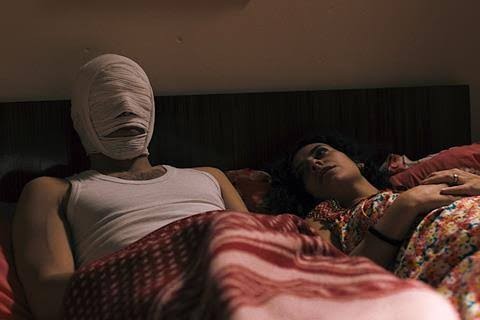
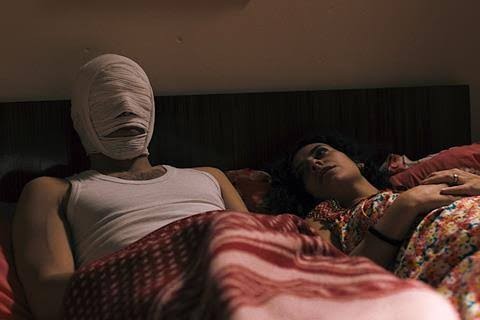
Ali Namous gives an excellent performance as Ahmed, given that his face is obscured by bandages for a lot of the movie’s runtime, Namous still captures the character’s anguish and lingering trauma despite us not being able to see any of his facial expressions.
What hinders Roqia is that the film’s pacing is greatly affected through the use of constant flashbacks, with the second act in particular bloating the pacing considerably. Because the movie jumps backwards and forwards between the past and present so much there are times when this becomes confusing and takes you out of the immersion that Koussim is trying to create.
Overall Roqia is an ambitious yet disjointed horror movie, with its ambitions being crushed by the lack of a strong second act. As interesting as some of its ideas and scenes are, they aren’t pieced together cohesively enough for me to justify giving it a full recommendation.

