

By Terry Sherwood
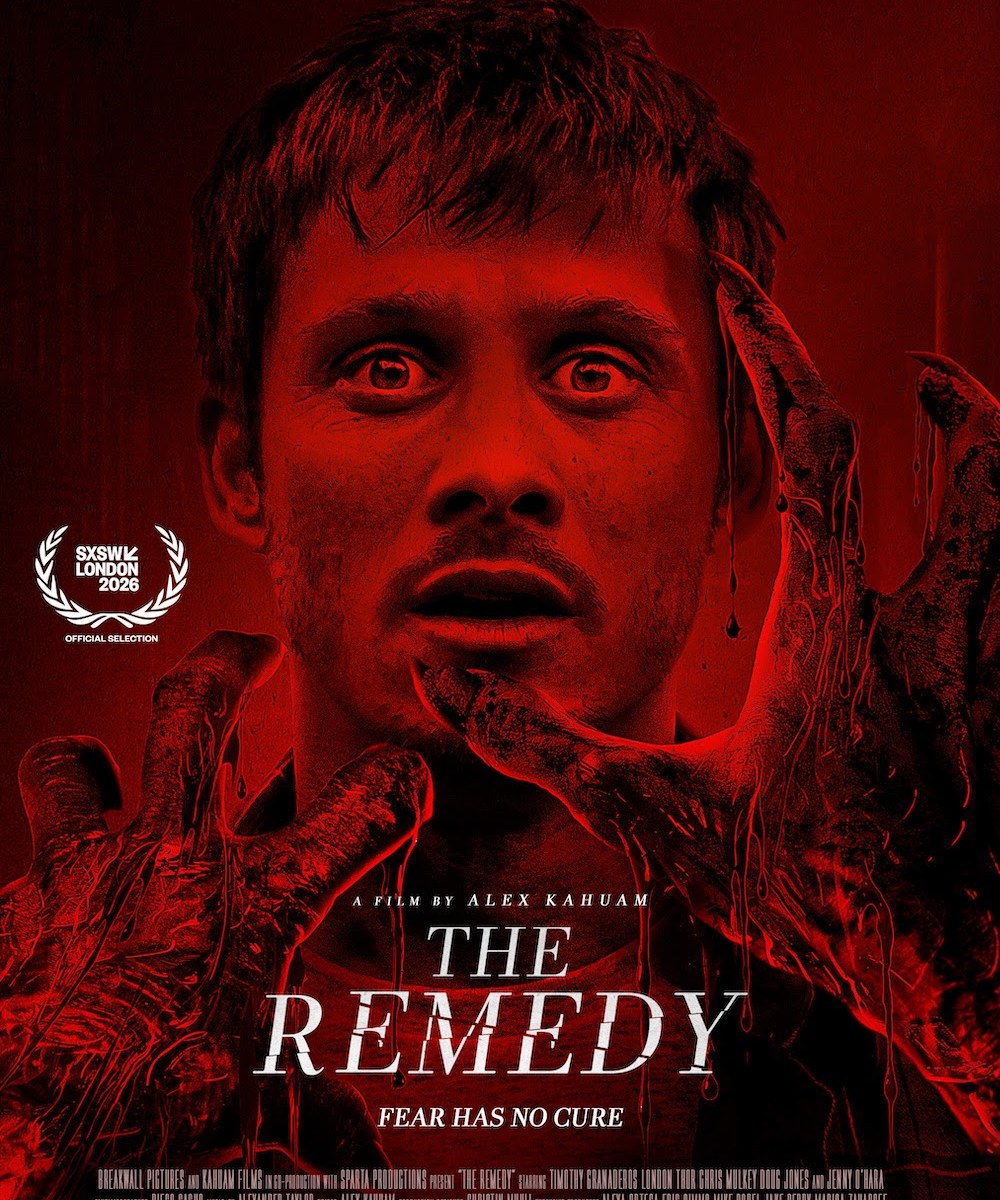
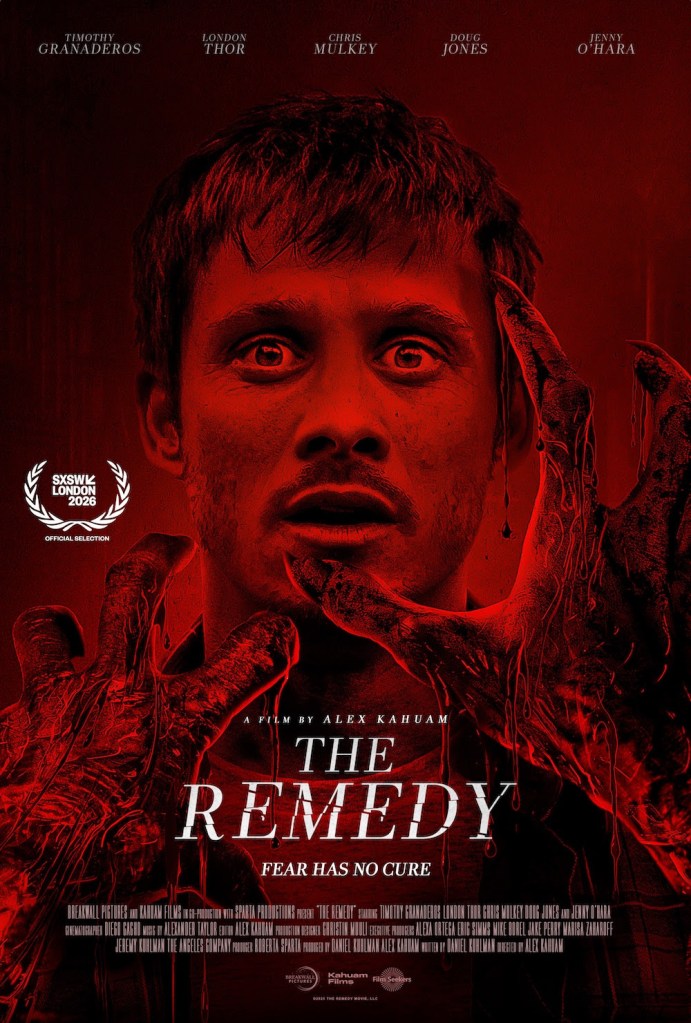
Alex Kahuam’s The Remedy arrives as something of a throwback picture It is a genre film built around themes of the fear of death and the terrible cost of miracles. At its heart it is a collision course tragedy of a family
The story centers on Jason (Timothy Granaderos), a young, divorced man struggling under the burden of caring for both his terminally ill mother, Maria (Jenny O’Hara), and his severely bi- polar sister, Rachel (London Thor). Faced with mounting medical bills, emotional exhaustion, and the inevitability of his mother’s death, Jason becomes increasingly desperate for a solution and frankly who wouldn’t. Conventional medicine offers little hope, leading him to pursue alternative treatments that eventually bring him into contact with a mysterious scientist with a cure for all played on video by Doug Jones.
The experimental formula is provided the results initially appear miraculous with he warning that “must be fed’. Maria’s condition improves rapidly. Her strength returns. Hope, long absent from the household, suddenly reappears. Rachel becomes more controlled in her outbursts and behavior. The treatment awakens something monstrous within Maria, creating a horrifying hunger that can only be satisfied by human flesh.
The film’s greatest strength is that it never loses sight of why Jason makes the choices he does. His actions become increasingly irrational and morally indefensible, but they emerge from love rather than selfishness. He is not seeking power or immortality. He simply cannot bear to lose his mother.
Timothy Granaderos delivers good performance as a man who has sacrificed his own life to care for his family, only to find himself pushed further toward the edge with every passing day. His exhaustion seems real almost claustrophobic at times causing his mental state to deteriorate
London Thor provides an effective counterpoint as Jason’s sister, Rachel. Although the screenplay could have developed her backstory more fully, Thor brings considerable depth to the role. As Rachel begins to question their mother’s miraculous recovery, Jason uses her mental illness to discredit her concerns. That creates a double-edged effect: a condition that is not always visible or easily understood becomes a driving force in the film, while also risking stigma toward those who live with it.
Some leaps in logic or oddly maybe a backhanded shot a current American medical coverage but at no time is a state solution offered except in a meeting with a Health official when the prospect is dismissed with one line. Why would a person with power of attorney not seek this when overwhelmed as money appears not to be a barrier? It is mentioned that Jason’s mother is a matter of weeks away from death in script. Why would a state facility offer to take a terminally ill person who would and should be put into Hospice care?
The supernatural aspect and practical munching effects are well done but watching a brother exploit his sister’s vulnerabilities for his own purposes is far more unsettling.
Doug Jones once again proves why he remains one of horror cinema’s most valuable performers. Though his screen time is relatively limited, his presence is felt throughout the film. Jones brings a sinister playfulness to the mysterious scientist, creating a character who seems to delight in the chaos he has unleashed.
Visually, The Remedy does well with small home set full of the clutter of life and children growing up. often striking. Bits of Roman Polanski’s Repulsion filter in with camera movement and almost giallo like tinting of some scenes with flashing lights toward the end Some of these techniques work exceptionally well, particularly during moments when Jason’s grip on reality begins slipping away. The final twist lacks the impact necessary to fundamentally change the audience’s understanding of the story.
The film’s most memorable sequence arrives during its final act. Jason wanders through his increasingly corrupted home as reality dissolves into a nightmare landscape filled with grotesque visions, distorted family members, and other horrors. Its strongest moments arise not from its monsters, gore, or supernatural mythology, but from its portrait of a family being destroyed by grief, responsibility, and impossible choices done through some wonderful dialogue. Sometimes that is delivered in high pitched tones.
The thankless roles its seems are the family, Katie Baker as a home nurse who has a ‘thing” for Jason and a sort of busybody beer drinking potential sexual predator buddy neighbour played by Daniel Kuhlman. These all seem to be around to provide a break from the madness, self indulgent filler that provides kill opportunity. The Nurse role would have been better development setting up Jason battling tradition methods with the Nurse.
The Remedy tries to bring the fear of losing someone you love can drive ordinary people toward extraordinary darkness. By grounding its supernatural horrors in recognizable human suffering even if it is a bit muddled and over the top.
 Bloody Flicks