

By Terry Sherwood
For over a century, cinema has taught us to distrust hallways. They are spaces that give way to nightmares, where characters pass unknowingly from one reality into another. The blood-flooded corridor of The Shining, the brutal hammer fight of Oldboy, hands reaching out in Polanski’s Repulsion. With Exit 8, Japanese director Genki Kawamura takes this tradition to its extreme. He abandons the destination altogether and traps both character and audience within the corridor itself. Unlike most of the ‘one set, lingering shot films with no plot”, this one crushes the experience of walking in a seemingly endless subway tunnel that some of us have done.
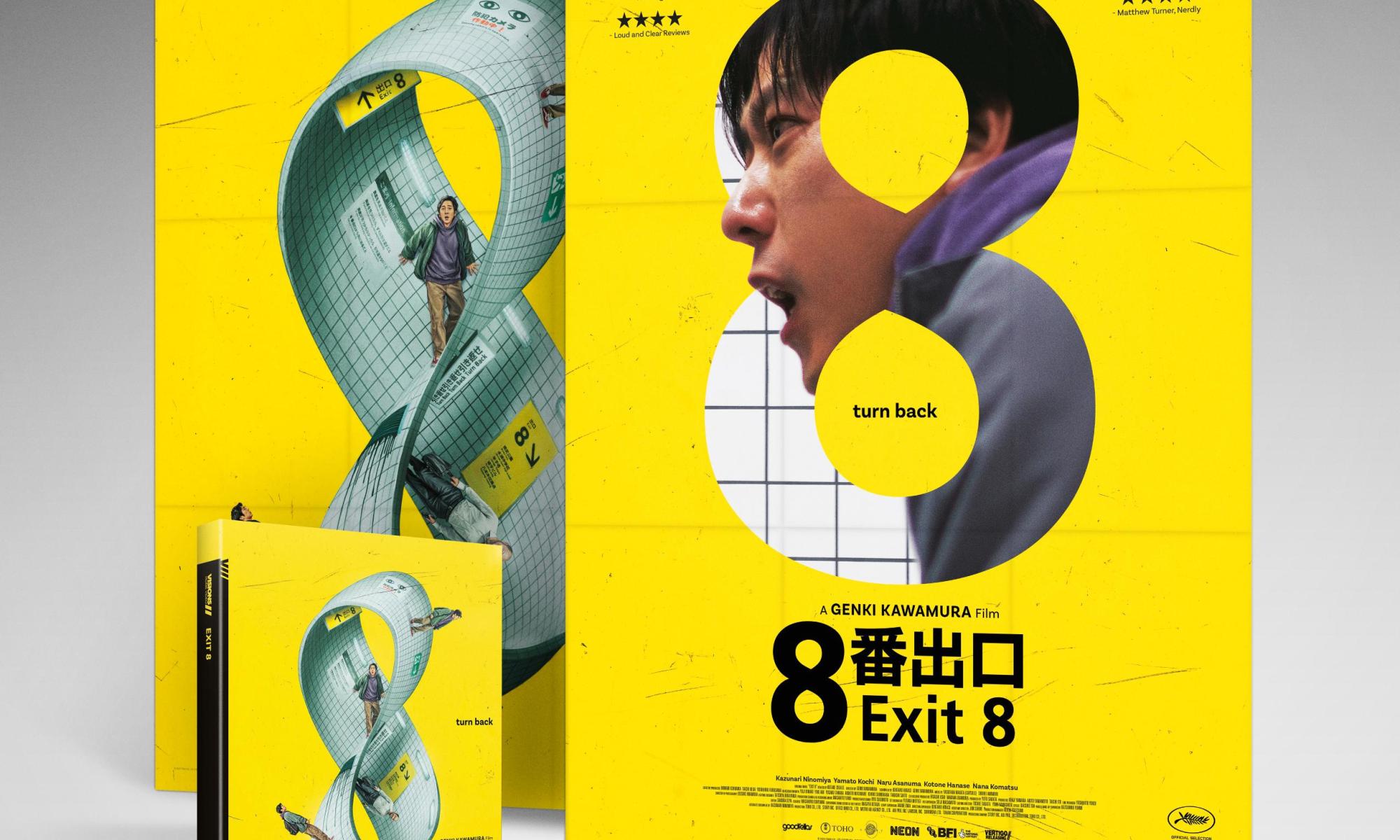
Adapted from the indie video game, which I had no idea existed, *The Exit 8, Kawamura’s film embraces a simple premise. An unnamed commuter, credited only as The Lost Man and played with remarkable emotion by Kazunari Ninomiya, attempts to leave a Tokyo subway station through Exit 8. Instead, he finds himself caught in an endless loop. Every attempt to escape returns him to the same sterile underground hallway. Instructions posted on the wall explain the rules: if an anomaly appears, turn back; if nothing is different, continue forward. Only by recognising subtle changes can progress be made.
The concept sounds minimal, and it is yet Exit 8 transforms repetition into a source of mounting terror. Like the best psychological horror, the film derives fear not from monsters but from the uncertainty of everyday things. Blood may drip from the ceiling. A silent stranger may behave oddly. A child may have a mark on its cheek. A locker may contain something impossible. Yet the true horror lies in never knowing whether these anomalies are real, imagined, or simply another layer of the puzzle.
The tiled corridor becomes a place outside ordinary existence, neither fully real nor fully dreamlike. The present intrudes in fragments of a crying child trapped, yet you never see it. The familiar environment slowly mutates into something alien. Morning commuters vanish. Distances become uncertain. Time loses coherence. The corridor becomes a modern purgatory. The nexus point for the journey begins and ends the film, where a passenger yelling at a mother of a crying child on a train reflects some views of motherhood, parenthood and society that await.
Visually, the film displays ingenuity again, unlike many of the shots in the home with no plot-type films, despite its confined setting. The largely continuous camerawork established with style in the beginning creates a sense of entrapment, while subtle visual jokes include an advertisement for an M.C. Escher exhibition and a sign that demands that you “turn back turn back turn back.”
This fusion of gaming without being jarring or too obvious is one of the adaptation’s greatest strengths. It recognises that the observation, pattern recognition, and rule-following central to the game’s appeal can generate suspense on screen. The audience scans the hallway as carefully as the protagonist, searching for deviations that might signal danger or progress.
The film’s thematic ambitions extend beyond puzzle-solving. The Lost Man’s journey is intertwined with a phone call from his former partner, who reveals she is pregnant and waiting for him to help decide their future. The prospect of fatherhood hangs over the narrative like an unanswered question. His physical inability to reach her mirrors his emotional inability to confront responsibility.
Yet even here, Kawamura largely succeeds because he grounds the narrative in the human vulnerability of a life decision. Ninomiya gives a compelling performance, conveying mounting frustration, panic, and self-doubt without much dialogue. Around him, a gallery of strange fellow travellers, including a silent Walking Man with a malevolent grin, an uncannily perceptive child, a robotic female and some monstrous-looking rate mutations, creates a harrowing moment that suggests everyone trapped within the corridor carries their own unresolved burdens.
The film’s deepest insight arrives when one character observes that ordinary life itself is repetitive. We wake, commute, work, and return home, endlessly retracing familiar routes while hoping we are somehow moving forward. Lovely knowledge of background and foreground frame use in a sterile environment. The repetition is even in the music, being a rendition of Bolero by Maurice Ravel heard in the beginning and at the end, with its climactic tones
Exit 8 demonstrates how cinema can borrow the mechanics of gaming without sacrificing emotional depth. The result is one of the most inventive adaptations that is intelligent and unexpectedly moving. It is not only a good genre film devoid of a large budget, but it is a solidly good piece of filmmaking. Literally, the Petula Clark song ” Don’t Sleep in the Subway Darling illustrated.
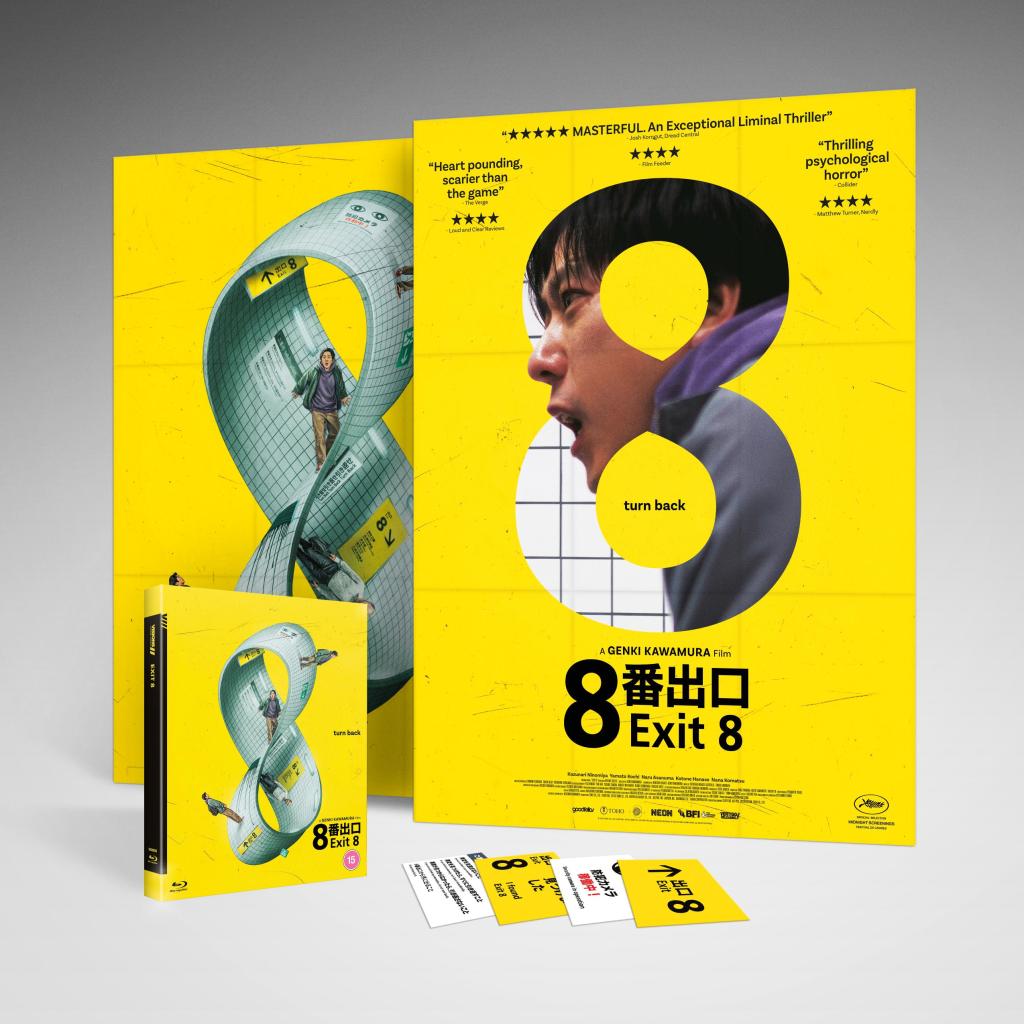
Exit 8 is on digital platforms on 8 June and Blu-ray on 29 June.
 Bloody Flicks
Exit 8 creates a unique horror experience with its simple yet incredibly tense gameplay. The attention to detail and psychological atmosphere make every walk through the corridor feel unsettling. Your review did a great job highlighting what makes this game so memorable. Thanks for sharing your thoughts
LikeLiked by 1 person
Thanks for seeking the words out.
LikeLike