

By Mark Hockley
Addison Heimann continues to carve out his own strange corner of genre cinema with Touch Me, a boldly offbeat follow-up to Hypochondriac that premiered at Sundance 2025. Rather than playing it safe, Heimann doubles down on his instincts, delivering a messy, funny, and emotionally raw sci-fi oddity that refuses to sit comfortably in any one box.
The film centres on co-dependent best friends Joey (Olivia Taylor Dudley) and Craig (Jordan Gavaris), whose already complicated relationship is thrown into chaos when they become entangled with Brian (Lou Taylor Pucci), a charismatic alien whose touch delivers a euphoric, drug-like high. What follows is a slippery blend of dark comedy, body horror, and existential unease, as desire, addiction, and control begin to blur in increasingly unsettling ways.
It’s a wild premise, and Heimann leans into it fully. There’s a playful, often chaotic energy running through the film, with surreal humour and bizarre set-pieces sitting alongside much heavier themes. Addiction, trauma, and toxic relationships are all explored through a distinctly genre-driven lens, sometimes with a surprising amount of tenderness. It doesn’t always work—there are moments where the narrative drifts or feels overextended—but the film’s emotional sincerity keeps it grounded, even at its most outlandish.
What really holds everything together is the cast. Dudley and Gavaris share a natural, lived-in chemistry that makes their friendship feel both genuine and uncomfortably suffocating. Their dynamic—by turns affectionate, toxic, and deeply dependent—forms the film’s emotional backbone. Pucci, meanwhile, is perfectly cast as Brian, bringing an awkward, unpredictable energy to a character that could easily have tipped into caricature. Marlene Forte rounds out the ensemble with a commanding presence that elevates every scene she’s in.
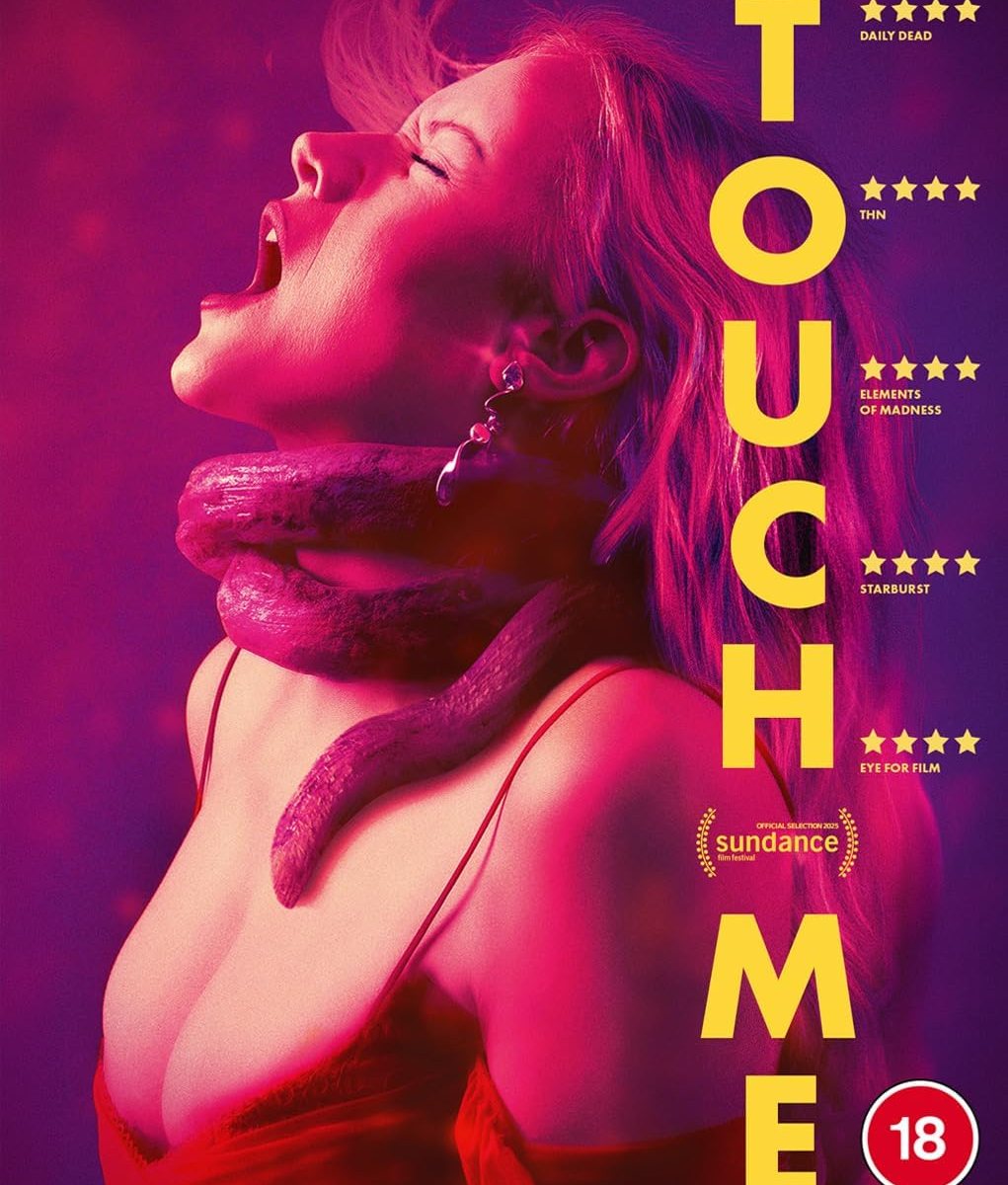
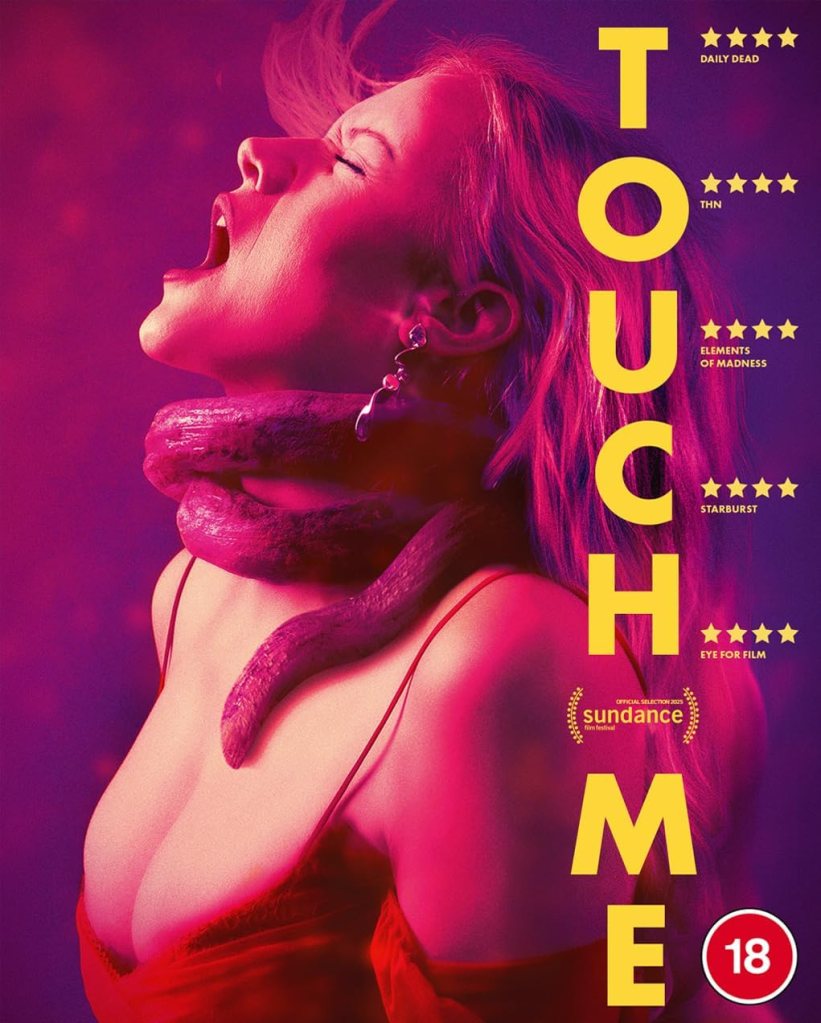
Visually, Touch Me embraces a lo-fi aesthetic that works in its favour. Heimann makes the most of limited resources, crafting a world that feels intimate yet stylised, with bold colour choices and an emphasis on performance over spectacle. The film’s tonal swings—from absurdist comedy to moments of genuine emotional weight—won’t work for everyone, but they speak to a filmmaker willing to take risks rather than smooth out the edges.
At its core, Touch Me is a film about longing—for connection, for validation, for escape from your own mind. It approaches those ideas with empathy, particularly in its portrayal of millennial anxiety and queer identity, treating both with a level of care that gives the film its heart.
It’s not a clean or conventional watch, and it occasionally feels like it could have benefited from a tighter edit. But there’s something undeniably compelling about its refusal to conform. For all its rough edges, Touch Me is inventive, deeply personal, and often surprisingly affecting—further proof that Heimann is a filmmaker worth keeping an eye on.
 Bloody Flicks