
By Terry Sherwood
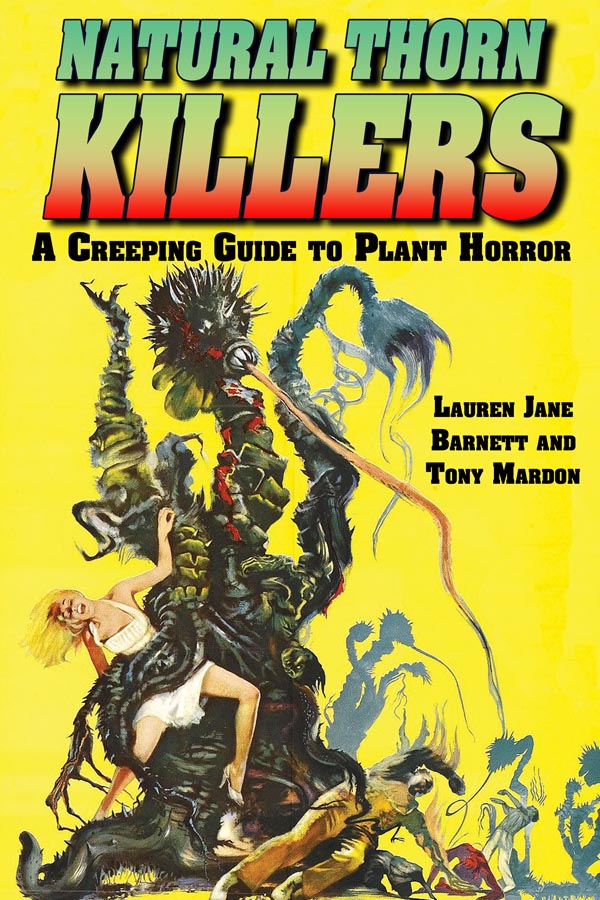
Natural Thorn Killers arrives with a premise so specific it almost feels like a dare: an entire volume devoted to plant horror in cinema. Sort of a huge Anti vegan manifesto by Lauren Jane Barnett and Anthony Mardonboth clearly steeped in the genre. The book is not merely a catalog of films, but something closer in spirit to an expanded, deeply researched critical article stretched to book length.
At its best, it thrives on that very foundation demonstrate an encyclopedic familiarity with their subject, moving fluidly from Cold War curiosities like The Thing From Another World to well known staples such as The Day of the Triffids and Little Shop of Horrors, and onward to more contemporary entries like In the Earth and Dark Harvest. The breadth is impressive, and the authors’ enthusiasm for eco-horror or what they aptly frame as “arboreal horror is engaging.
Structurally, Natural Thorn killers have s solid root system often reads like a traditional look more because the subject like an extended, in-depth magazine feature. Scary Monsters did this in a single issue or a long-form genre essay that has expanded beyond its natural boundaries. Entries on individual films tend to feel discrete, sometimes lacking that would elevate the work from compendium to argument. The result is a text that is rich in information but occasionally just glance in passing planet shop
The informal, almost fanzine-like tone will likely appeal to readers who enjoy immersive genre writing without heavy academic stuff not as silly as the original Famous Monsters of Filmland once was appealing to ten-year-old boys inspire of the title choice The authors lean into a playful sensibility as “hazmat suits” and “weedkiller” in hand that mirrors the absurdity and inventiveness of the films themselves. This stylistic choice keeps the material accessible. This is also about film not about literature which does contain evil plants all on there own. One is left wanting more sustained ecological anxieties underpinning these films, the evolution of plant horror in relation to environmental discourse, or the symbolic role of vegetation as both alien and intimately familiar.
The sheer scope of films covered ranging from kaiju-adjacent entries like Godzilla vs. Biollante to folk-horror inflections such as The Hallow ensures that nearly every reader will discover something.
Ultimately, Natural Thorn Killers succeeds as a passionate, wide-ranging exploration of a peculiar and often overlooked corner of horror cinema. It is best approached not as a definitive academic text, but as a substantial, enthusiast-driven deep dive more of a “huge version of an in-depth article,” in effect, that celebrates its subject with vigor and obvious devotion. For readers willing to embrace that format, the book offers a fertile, if somewhat unruly, garden of cinematic soil.

