

By Terry Sherwood
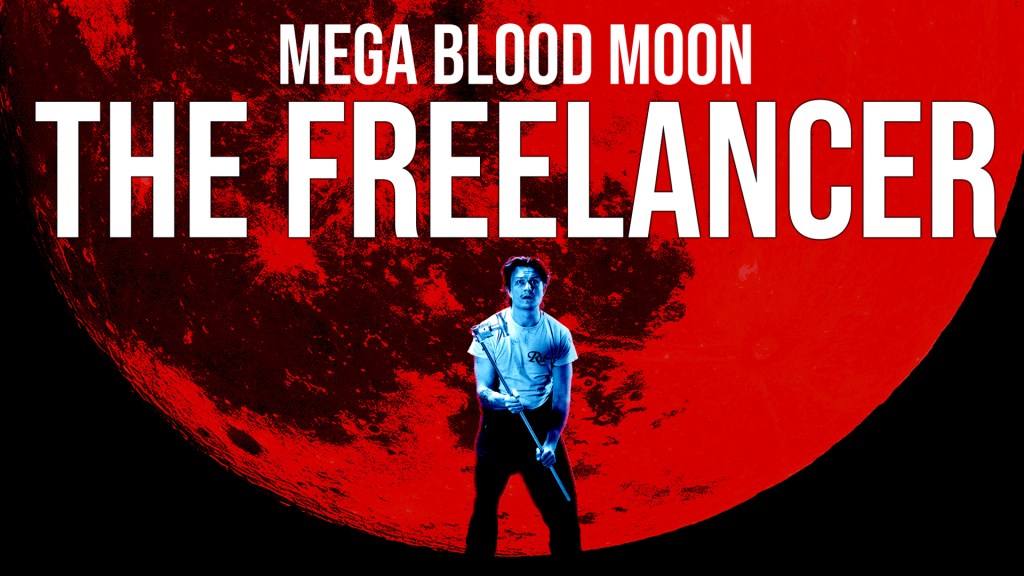
Mega Blood Moon: The Freelancer is the kind of film you want to root for. It’s scrappy, inventive, and brimming with the creative urgency that defines good DIY horror. Director Ben Floss, along with his two collaborators, shot it secretly on weekends in their actual workplace. There was no full script—just rough outlines, storyboards, and a building they knew too well. That behind-the-scenes grit bleeds into every frame. Unfortunately, so does a decision that derails the film’s emotional core: the killing of a dog in the opening minutes. It’s a move that’s both narratively pointless and ethically suspect.
Let’s start with the good, because there is plenty. The film follows a man on what should be his final day at a soul-crushing job. Instead, his environment starts to turn on him. Lights flicker. Noises come from nowhere. He unravels, piece by piece, until he’s fighting for his sanity—or maybe what’s left of it. The film isn’t interested in a clean plot. It’s more about mood, disorientation, and the slow collapse of routine under stress.
What works especially well is the way the filmmakers use their limitations. The production value is minimal, but instead of hiding that, they lean into it. The office looks like a place you’ve worked—or tried to escape from. The fluorescent monotony becomes haunting under the blood-red lighting of the moon. It’s a smart visual metaphor: the ordinary turned hostile. Likewise, the performances are restrained and naturalistic, which adds realism even as the story tilts toward surreal horror.
The sound design subtle for a low-budget horror film. Where others might go for loud jolts or stock tension cues, The Freelancer uses silence and ambient tones to let unease build slowly. The moments of violence, when they come, are visceral but never gratuitous—except for the one that kicks it all off.
And that’s the problem. The film opens with the sudden, brutal death of a dog. No buildup. No reason. No payoff. It’s a jarring moment that seems designed solely to provoke a reaction, but not in service of the story. It doesn’t develop the protagonist. It doesn’t establish a theme. It doesn’t even tie back in any meaningful way. It’s just cruelty, on screen, for shock. Like the opening moments of the first John Wick series. Why do I always ask why film makers must be cheap?
Horror has always walked a fine line with violence. Done right, it reveals character, raises stakes, or exposes something rotten at the core of the world. Done wrong, it feels like a shortcut. That’s what happens here. The dog’s death is a lazy way to grab attention. And in a film that otherwise takes its time building dread through atmosphere and psychology.
Worse, it damages the audience’s ability to connect with the protagonist. We’re supposed to follow this man as he slips into paranoia and violence, sympathizing with his breakdown in the face of dehumanizing work. But that connection fractures when the film opens by showing us—or suggesting—he’s complicit in an act of meaningless cruelty. It confuses the moral center of the film. Are we watching a man lose his grip, or are we just watching a man who was already lost?
The rest of the film tries to rebuild that empathy. Voice-only characters like his partner Alicia add some grounding. A sketchy supervisor named Richard introduces tension and corporate menace. There are moments of dry humor from remote coworkers and apathetic security guards. A stray cat even pops up now and then, offering a strange little island of calm. All of this works toward making the world feel lived-in, surreal, and on the edge of collapse.
But the damage is done early, and not everyone will stick around long enough to let the film earn back that trust. Its final sequences, in particular, are raw and surprisingly effective, blending fight choreography with existential dread. You can feel the filmmakers pushing past their limits, trying to make something that matters. And mostly, they do.
That’s why the choice to open with the dog’s death is so baffling. It’s not just unnecessary, it undercuts everything the film does well. In a project built on empathy, creative hustle, and the quiet horrors of everyday life, it’s a moment that betrays the audience’s trust.
Mega Blood Moon: The Freelance is available on Amazon.
 Bloody Flicks
I don’t remember the part where he kills the dog.
LikeLike