
By Simon Thompson
Horror titan Garth Marenghi once said “I know writers who use subtext, and they’re all cowards” a principle which directing duo Karyna Kudzina and Michael Vaynberg have adopted with full aplomb with their movie Silence of the Prey. Silence of the Prey can best be described as a film with an admittedly valiant, but completely in your face, message about the plight of immigrants and refugees trying to start a new life for themselves in a foreign country despite prejudice, fear, and ignorance. The problem however, is that the movie itself is so predictable that Kudzina and Vaynberg might has well have hired an air-traffic controller to alert the audience to every set piece scare and mis-direction.
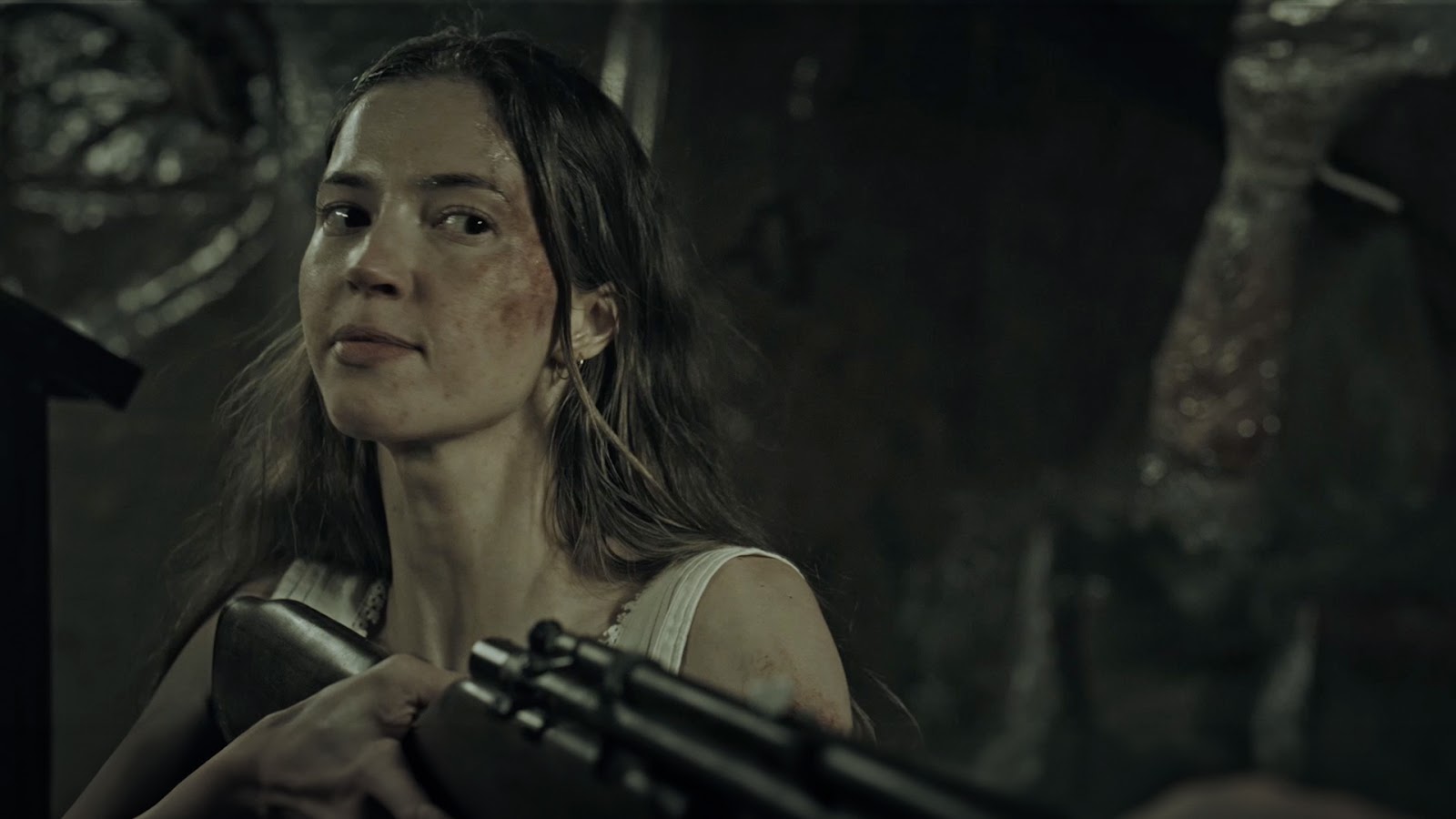
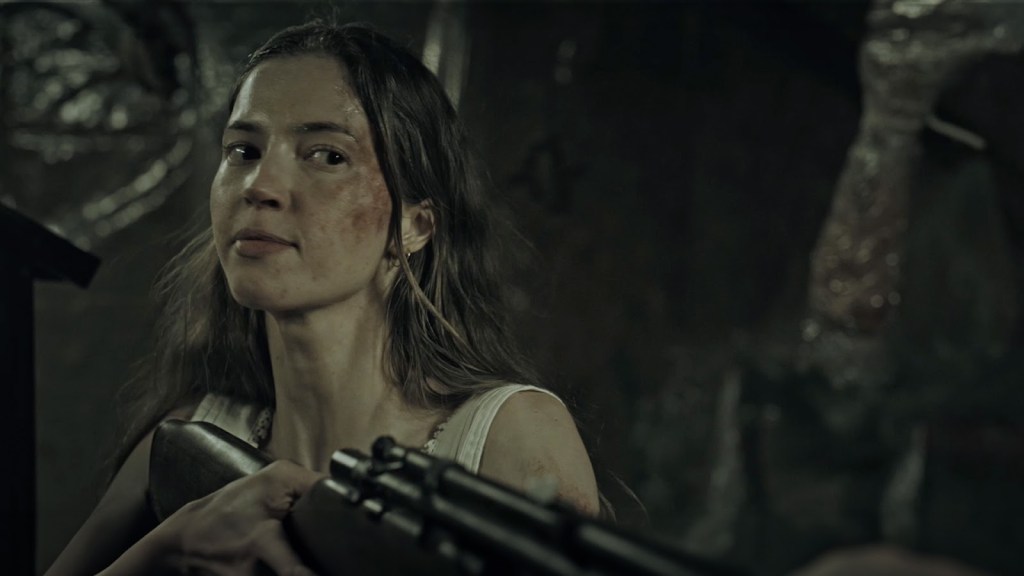
The plot focuses on Nina ( Karyna Kudzina), an undocumented Belarusian immigrant mother who has taken a caretaker job so that she and her daughter can have a future in America, at the rural home of an eccentric old man named Luther (Chris Lapanta). Luther and the area itself at first seem to be a picture-perfect idyll of rural Americana, but it becomes readily apparent that something far darker is lurking under the surface.
Whilst Silence of the Prey is a beautiful looking movie, with cinematographer Saro Varjabedian extracting every ounce of rural beauty from the film’s rural locations ( giving the visuals a striking Grant Wood painting quality) the script is what sadly lets everything down. Everything in Kudzina and Varjabedian’s script has to signpost the narrative’s intent and message at all times, which leaves the audience with no suspense or nervous anticipation over what might happen next.
From the first moment Luther is introduced you are under no illusions that he isn’t going to be the antagonist, so when his true intentions are finally revealed it’s about as shocking as finding out that Real Madrid have beaten Getafe. The problem is not that Kudzina and Varjabedian have something to say the problem, it’s that when you prioritise bashing the audience other the head with a message over telling a chilling story the final result is that you’re left with a movie which isn’t particularly engaging.
And it’s a shame because Kudzina and Varjabedian’s script has a few nice moments of misdirection which actually work, for example the introduction of the character Andres, an excellent scene which managed to make me nervous to move around in my seat for once. Sadly moments such as that in Silence of the Prey are few and far between to an almost frustrating degree.
To conclude, Silence of the Prey is an overly preachy almost anaemic viewing experience which forgets what I like to term the George A Romero principle, that being that social commentary needs to fit around a story not the complete opposite priority with the story being a pesky inconvenient after-thought.
 Bloody Flicks