
By Terry Sherwood
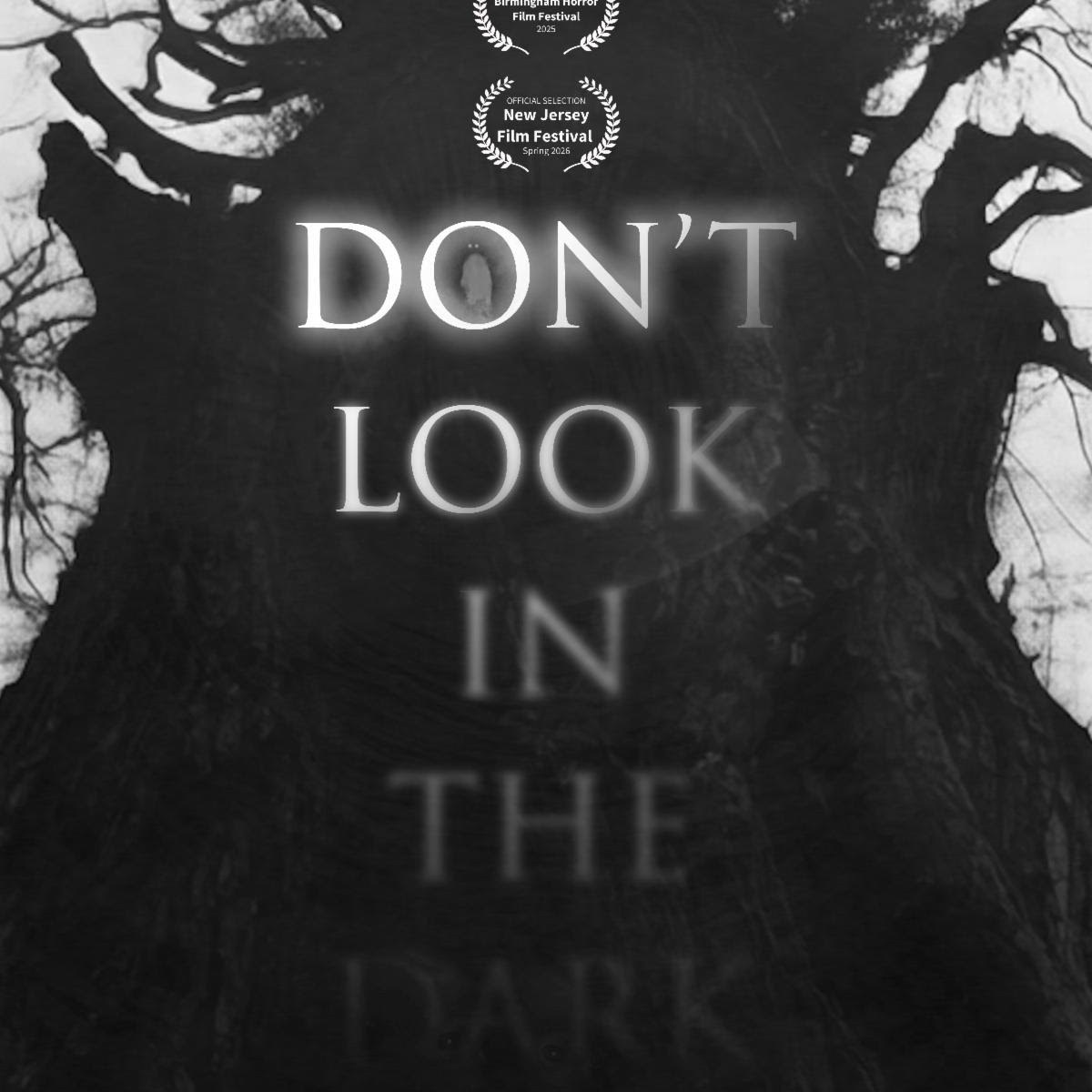
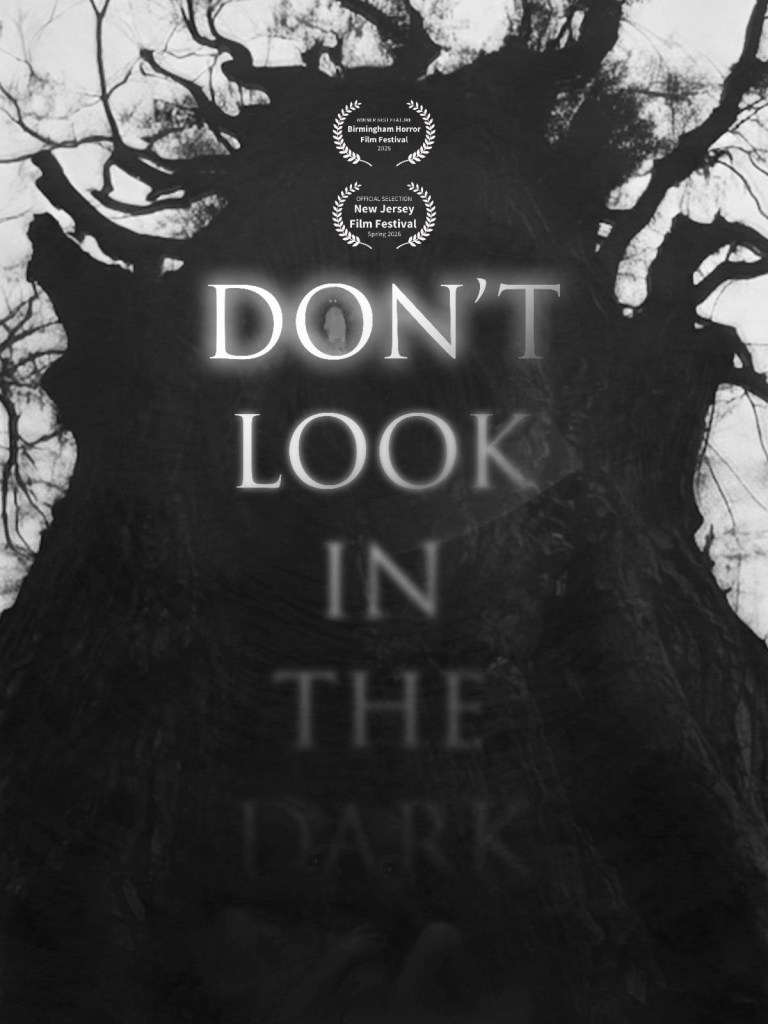
There’s something deeply ironic about Don’t Look in the Dark. It presents itself as a like a radio drama an audio-first horror experience supposedly built around sound, imagination, and psychological immersion. The trouble is its like an experimental film that forgot to bring images with it. What’s left is a hollow exercise in voices, a work that mistakes deprivation for artistry and silence for meaning.
The premise that one gets is Golan and Maya retreat into New Jersey’s Pine Barrens to camp, honor Maya’s deceased father, and prepare emotionally for the birth of their child. Grief, pregnancy, isolation these are strong theme. Soon, their phones begin recording on their own. Audio fragments appear without explanation. Distorted sounds suggest something in the woods, something aware. Maya becomes convinced there is a child somewhere beyond the tree line.
Great for a film by you never get images even remotely resembling this Audio horror thrives on implication. Sound can turn the listener’s own imagination against them. Silence can feel like pressure but once again this is a film for the theatre or even television. It thinks like a film specifically, the recent strain of minimalist, experimental horror that believes mood alone is a substitute for structure.
I adore French new wave film making, with its jump cuts, nonlinear stories, guerrilla film making styles, use of non actors. The seismic change it ushered in but that had style, broke rules, had finesse without knowing it did. This does not it nor does it try to be that making the comparisons to the ridiculous Skinamarink or the video game on film In a Violent Nature unavoidable. If you experiment have reverence for what has been done.
Don’t Look in the Dark relies on somnambulist repetition, fragmentation, and prolonged absence of payoff. Scenes cut or rather audio babble occurs instead of developing. Sounds appear, vanish, and reappear with little variation. Conversations trail off not because something interrupts them, but because the work refuses to commit. The listener not a viewer is constantly invited to ask, “Did I hear something? Or more importantly why am I in a dark room listen to voices Again this is Film not a radio or podcast drama.
This approach doesn’t work it a film theatre setting when you need images even the most remote looking. Grainy textures. Empty hallways. Darkness as visual space. Strip those visuals away, and the weakness of the strategy becomes glaring
The film if you can call it that leans heavily on the idea that ambiguity is the point. That each listener hears something different. That meaning is subjective. These are familiar defenses, and they’ve become increasingly common in modern horror discourse. But ambiguity is not the same as depth.
This is especially frustrating because the themes are right there. Grief could be reshaping perception. Maternal instinct could be manifesting as auditory hallucination. The child in the woods could be memory, premonition, or something folkloric tied to the Pine Barrens themselves. Any of these readings could work. The film gestures at all of them and commits to none. Again, this is film right up there with experimental films that don’t work for some. Kudos for trying something different.
Performance-wise, restraint dominates to a fault. Maya carries a low, persistent unease, but her inner life remains frustratingly opaque. Golan exists largely to react, grounding scenes without shaping them. In a radio play—where voice is character—this emotional thinness becomes impossible to ignore. Silence without emotional context isn’t tension; it’s absence.
Ultimately, Don’t Look in the Dark feels like a project designed with cinema in mind and awkwardly stripped of its visuals, leaving behind the least interesting parts of experimental film language. It inherits the worst habits of modern minimalist horror: endless suggestion, refusal to escalate, and the belief that boredom is a form of bravery. Some French critics had a word for it, it begins with ‘’M and its not complimentary.
 Bloody Flicks