
By Terry Sherwood
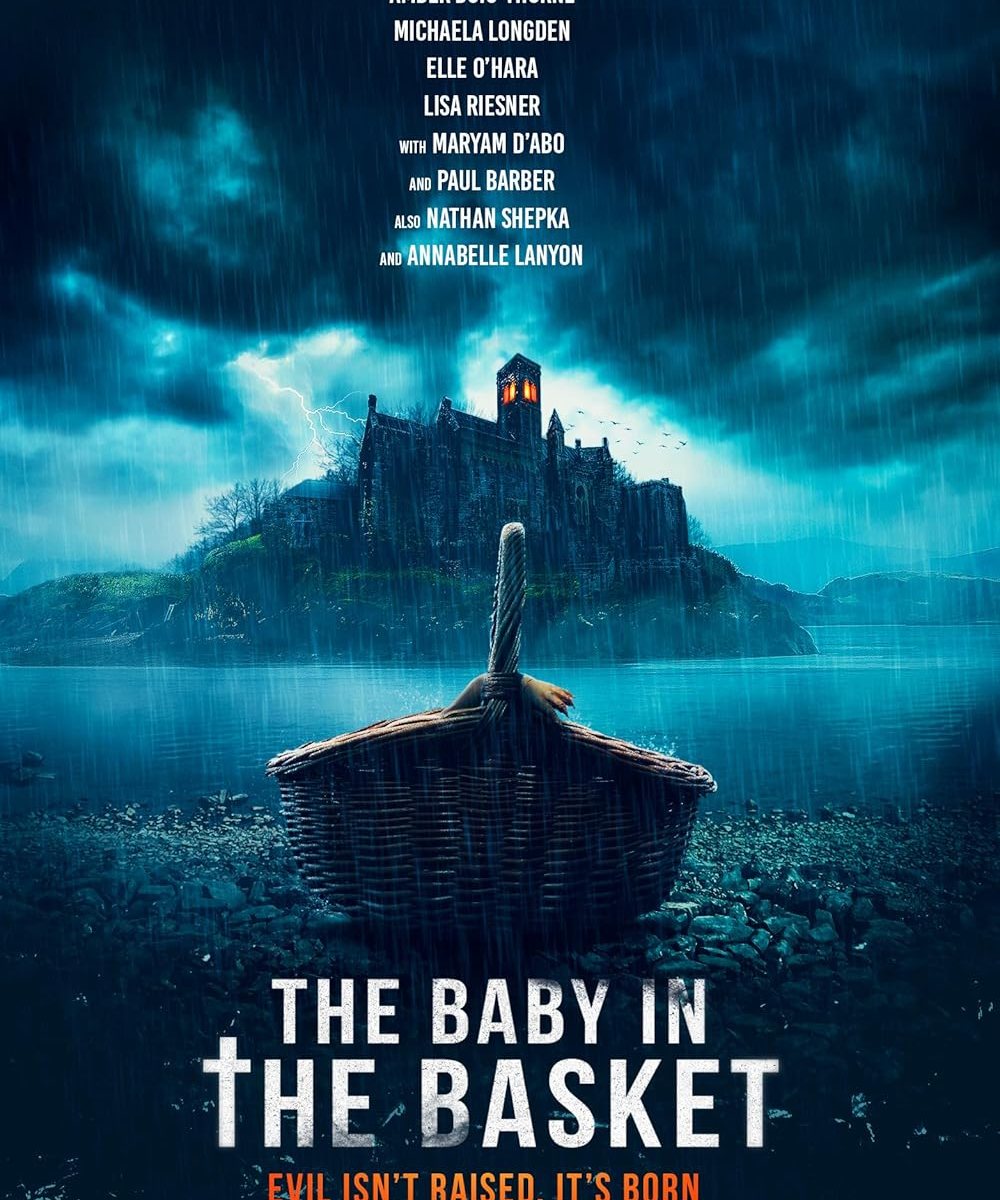
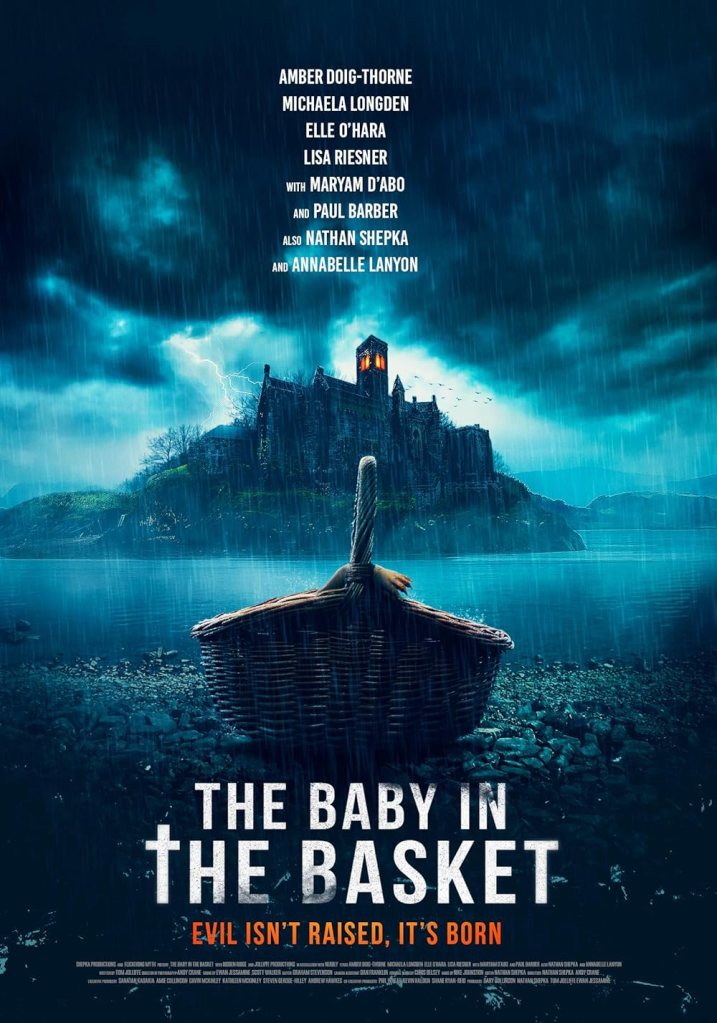
Gothic cinema is not dead—nor undead—by any means, my fiendish friends. In fact, it seems to grow stronger with every storm cloud drifting across the silver screen. Much has been made of the David Eggers Nosferatu as a living Edward Gorey sketchbook come to life, but in that same swirling, imaginative vein arrives a very different creature: The Baby in the Basket, a windswept Hammer-style slice of religious horror brewed from peat, mildew, and righteous dread. One can practically feel the damp stone beneath one’s boots as Satan’s whisper coils through the cloisters.
If the premise sounds familiar—well, it should. We’ve had our share of devil-born terror across cinema history, and with Guillermo del Toro’s brilliant Frankenstein currently in its monstrous production feast, the genre’s lineage feels more vibrant than ever. Yet what separates this film from the modern currents is its devotional embrace of old British gothic, echoing Peter Sasdy’s ornate and sensuous Taste the Blood of Dracula. This isn’t another glossy, possession-based shakedown. This is a candlelit tapestry woven from cold wind, rough stone, and the moral weight of vows under siege.
Directed by Nathan Shepka and Andy Crane, from a script by Tom Jolliffe, the film anchors itself firmly in 1942, with the distant thunder of World War II casting a pall across the isolated Scottish monastery of St. Augustine’s. As the nuns brace for a violent storm front, a mysterious basket is discovered on the doorstep. Inside lies a baby—small, silent, and wrapped in enigma. Sister Agnes (Amber Doig-Thorne) takes charge of the child but soon begins to experience visions and whispered temptations. Her mind is assaulted by hellish voices and sensual flashes of herself entwined with the handsome young handyman, Daniel (played by director-star Nathan Shepka). Whether these images are infernal temptations or buried human desires clawing to the surface remains one of the film’s most effective ambiguities.
Devil-child stories are familiar terrain, but style is where this picture spreads its wings like a dark angel. Shepka, Crane, and their visual team render the monastery and its surrounding moors with painterly gloom straight out of the Hammer canon. Candle flames waver against sweating stone. Corridors stretch into blackness. Daylight feels thin and unwelcome. This is a setting alive with bleak beauty, the kind of world where salvation and damnation seem only a breath apart.
The ensemble cast is uniformly strong, with Amber Doig-Thorne, Michaela Longden, Elle O’Hara, Lisa Riesner, and Shepka forming the main orbit of characters. Genre stalwarts Annabelle Lanyon and Paul Barber lend additional weight. But the standout is unquestionably Maryam d’Abo as the Mother Superior. Her death scene is startlingly poignant—evoking the tragic grandeur of Marita Hunt’s Baroness Meinster in Hammer’s The Brides of Dracula. It’s the kind of performance that lingers.
Musically, the film benefits from David Belsey’s haunting score, punctuated by a mournful cello solo by Joanna Wilson. The music supports the visuals without ever overwhelming them, and the filmmakers wisely allow stretches of silence to speak for themselves.
If there are flaws, they lie in occasional stiffness during action moments and the inherently derivative nature of a Devil-baby narrative. The film also contains a harsh moment of animal cruelty involving an injured bird—disturbing, and worth mentioning for sensitive viewers. While it serves the story’s descent into moral chaos, it is undeniably difficult to watch.
Still, The Baby in the Basket rises well above the conveyor belt of modern horror, the slasher deluge, the neon-tinted teen peril pictures, the trauma-driven pseudo-revenge thrillers masquerading as horror. Instead, it offers pure, gothic dread: repression, temptation, sanctity under siege, and the cold breath of something infernal in the rafters.
Light a votive candle real or electric—and prepare to be carried into a monastery where every shadow might be hiding the Devil’s cradle. A beautifully bleak return to true Hammer-hearted horror on budget which does not detract nor should it .
 Bloody Flicks