

By Terry Sherwood
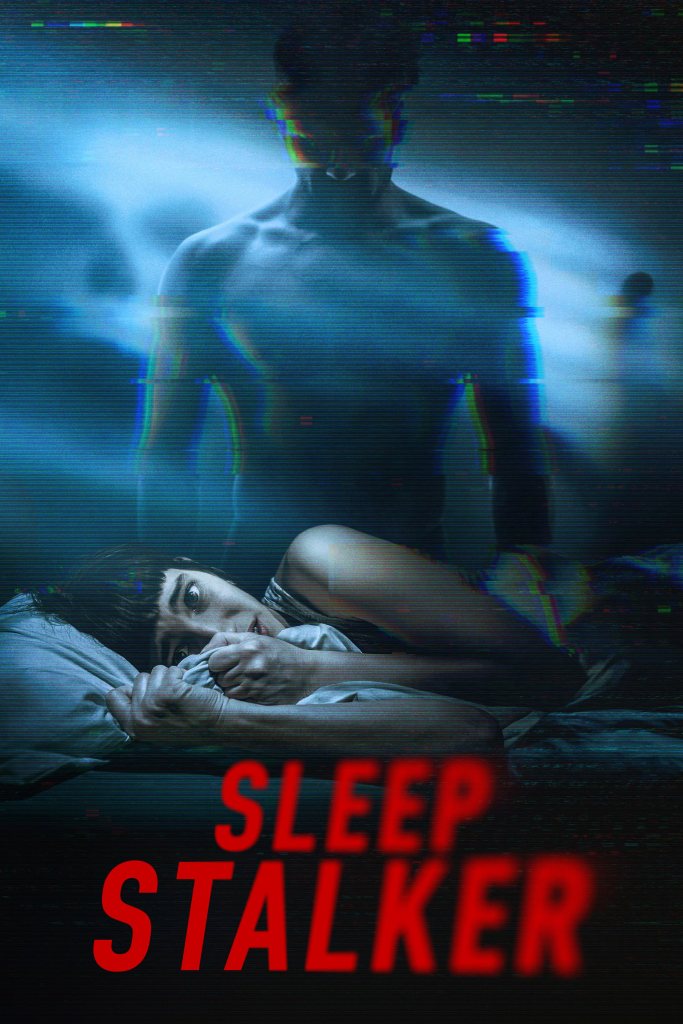
The concept of “Social media influencers here played by Shane (Josh Gilmer) and Abby (Gabrielle Montes de Oca) is something I find hard to understand. These two are hosts of the DIY home-improvement channel At Home with Shane and Abby, who have just bought a house unseen. Their plan is simple: film their renovation journey, post the videos online, and keep their audience happy. Content is king no matter how relevant it is or who provides it. What they didn’t count on was Shane suddenly coming down with a severe case of sleepwalking and do odd stuff also known as parasomnia. From that premise, Sleep Stalker sets off down a well-worn but watchable road of dread and domestic strain.
The faux-documentary style, the endless justifications for why someone keeps filming, and the inevitable shaky camera, screams usually wear me. Oddly enough, that may have worked in this film’s favor. Sleep Stalker reminded me of Paranormal Activity series which I read about and like Italian cannibal films I will not watch.
The story itself is straightforward. As Shane’s nocturnal adventures become more disturbing, Abby tries to rationalize what’s happening: stress, trauma from his childhood, even a medical condition. Their participation in a sleep study gives the film an excuse for multiple cameras and a few scenes outside the house, introducing a doctor who attributes Shane’s behavior to repressed issues. But Shane is convinced something supernatural is at work, especially after a Ouija board spells out JOHN in blood. This is without it being referenced to renovating the lavatory. When medium Gabriel (Yvans Jourdain) confirms the house’s dark history of a murder taking place. Abby thanks him politely and shows him the door. From there, the hauntings intensify, and the couple’s relationship begins to crumble like a poorly built garden wall.
Really, that’s it plot-wise leading to the inevitable final freeze-frame and explanatory captions. What keeps it engaging are the performances. Josh Gilmer and Gabrielle Montes de Oca are genuinely convincing as both partners and influencers; they feel like a real couple who have built an online life around their chemistry. Their easy rapport and believable tension anchor the film. Having Alexandra Corin Johnston and Brian Guest drop in occasionally as friends provides some much-needed perspective
Sleep Stalker is an low budget we did at one time call them Poverty Row project through and through with a tiny cast and limited locations. But that economy of means works in its favor. Found-footage horror thrives on constraint unless you are benchmark V/H/S. series with more resources. and here it mostly feels authentic. The home-shot sequences inside Shane and Abby’s house are especially effective at being well lit, and cleanly recorded. Lighting and sound, often the undoing of micro-budget horror, are consistently strong even in night scenes, exterior shots, and the crawlspace under the house.
The scenes set in the sleep clinic break their own rules with polished, multi-angle coverage despite nobody holding a camera. It’s not a flaw, but it changes the vibe trying to bring in authenticity. This shown more the voluminous medical credits and the end of the work. Editing choices can be jarring which runs with the style. As the supernatural tension mounts, the film keeps cutting to Abby’s chipper attempts to continue filming their renovations. It’s a deliberate device showing her denial and Shane’s obsession more to take the place of relief with normalcy, but it interrupts the momentum. The mysterious box Shane finds under the house, which is never opened or mentioned again.
Pacing is another mixed bag. The first half is slow to reach the real scares; there’s a lot of footage of Shane wandering the house muttering to himself. Once the film commits to its haunting, the energy improves, though the outcome remains predictable. Compared to Deadstream which was the sharp, self-aware satire of influencer horror one finds that Sleep Stalker plays it straight. The social-media theme, so prominent early on, fades almost entirely at the end.
Ultimately, Sleep Stalker offers no reinvention of the wheel which doesn’t have to do, but it executes the fundamentals well. The filmmakers make the most of their limited means, and the personable leads carry the picture with charm and conviction. For those wary of found footage, the camera work here is mercifully stable and coherent unlikely to induce motion sickness. And while it might not linger long in the memory, it’s a solid entry in the “influencer horror” sub-genre.
Not a lot of surprises, true—but sometimes it’s the sincerity of the performances, rather than originality of the premise, that makes a film worth watching. Sleep Stalker passes that test.
 Bloody Flicks