


By Terry Sherwood
It’s always interesting that one of the most ordered, disciplined, and outwardly polite societies produce the most chaotic, transgressive art. Japan has its reputation for etiquette, restraint, and ritual. Then you have Asian Extreme cinema featuring film that tears through civility. The Incomplete Chairs, Kenichi Ugana’s new feature film about furniture design should give us images of craftsmanship and beauty; instead, it delivers a grotesque portrait of obsession, a kind of love letter to creation and destruction.
The story concerns Shinsuke Kujo, a meticulous designer who becomes consumed with crafting the “perfect chair.” It sounds like a fable for courage and innovation but so much in Japanese horror if filled with mundane twists into the monstrous. Kujo’s workshop, at first an immaculate of tools and fabrics that looks suspiciously like an abattoir which in fact is the chairs he builds cease to be furniture and become monuments of cruelty featuring stitched flesh, stained with blood, polished with fluids.
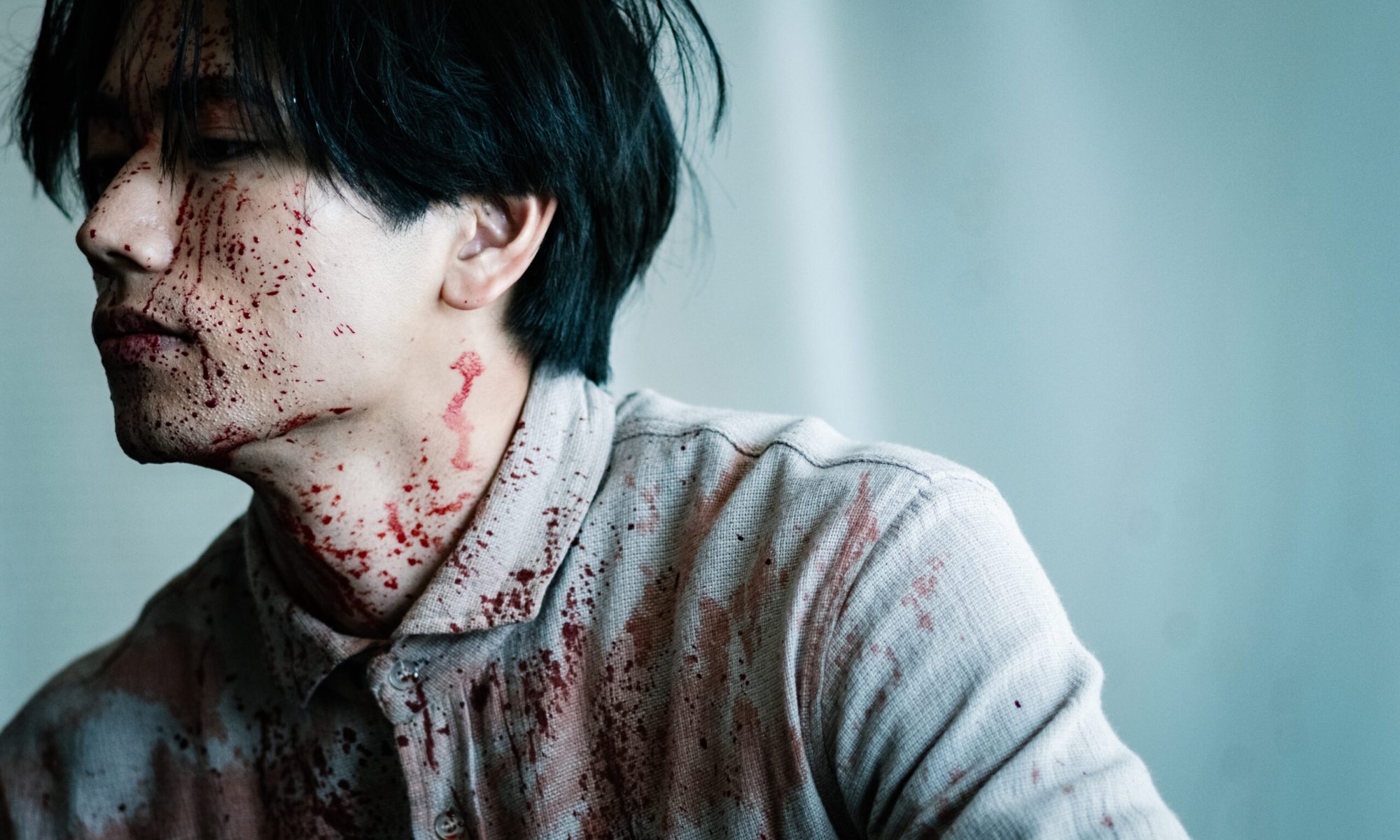
The gore and the rage exhibited is relentless, not ornamental but central. The picture embraces the language of splatter with a precision that borders on the perverse. Fingers crushed under clamps, upholstery stapled into skin, splinters drive deep into flesh. internal organs spill out all with practical effects. Blood seeps into fabric like ink on parchment, the red blossoming across cushions in sickly slow motion. There is a sequence in which Kujo experiments with “ergonomic design” by binding a victim to a prototype chair, tightening straps until bone cracks through skin. Another moment lingers on the grotesque sewing of living tissue into padding. These are not quick cuts designed for shock; they are meditations on violence.
In this, Ugana aligns himself with the French Extremity movement bringings to mind films like the original Martyrs and High-Tension forcing audiences to confront suffering as spectacle. Like those films, The Incomplete Chairs blurs the line between horror and endurance test. It asks: why do we look? Why do we watch when the screen itself feels hostile images and human screams? And more disturbingly, what beauty do we find in the grotesque?
Kujo himself is not a raving lunatic but a quiet, methodical figure. This is where the American Psycho comparison more from the Brett Easton Ellis’s book than the film. He speaks in measured tones has a female friend who pops in occasionally and says nothing amid the blood. Like Patrick Bateman dissecting business cards, Kujo describes upholstery choices with the reverence of a monk, even as he stains the materials with gore. The juxtaposition of calm voice and violent imagery deepens the horror hiding sadism in plain sight.
What makes the film resonate beyond its shocks is Japan like France, is a society often associated with refinement and order with art, cuisine, etiquette, ritual and precision. It suggests that repression breeds eruption, that the strict architecture of daily life creates pressure that must explode in art. The Incomplete Chairs thrive in that tension.
There are weaknesses, of course. The film’s structure of design, mutilation, failure, repeating with various people can leave one hoping for difference at times it seems to reveal a little too much in its own excess, daring us to look away but not always deepening the narrative. Yet this too feels deliberate: the viewer is trapped, much as Edogawa Rampo’s story The Human Chair that trapped its occupant with a sofa to observe life which I read in long lost anthology years ago. The monotony of obsession is the point. By the end, we are no longer watching Kujo’s descent we are sitting in it, bound by the straps of his madness.
Performances support this vision with chilling effectiveness. The actor playing Kujo embodies duality: a craftsman’s pride and a predator’s hunger especially in moments of leering wide mouth smile. His victims, often anonymous, nonetheless radiate enough humanity that their suffering strikes hard. The squeals, gasps, and silences of mutilation echo long after the screen goes black.
In the end, The Incomplete Chairs a plunge into obsession and revenge upon those with money rendered through gore, satire, and cruelty. It is a reminder that horror can be both disgusting and beautiful, both unbearable and essential. From civility, blood. From wood and fabric, a nightmare throne that is like in the film makes the occupant sitting on it uncomfortable.
Incomplete Chairs screened as part of Grimmfest 2025.
 Bloody Flicks