


By Terry Sherwood
Brazil’s macabre master José Mojica Marins better known to horror fans as Coffin Joe left behind an enduring legacy of nightmarish surrealism, spiritual dread, and confrontational imagery. His films were never content to simply scare; they assaulted the viewer with a fever-dream blend of morality play, blasphemy, and bodily horror. Joe Hollow’s Flesh of the Unforgiven channels that same uncompromising energy. While not as steeped in religion as Coffin Joe’s works, Hollow’s film toys with the same themes of sin, punishment, and the idea that damnation is both physical and psychological. And like Coffin Joe’s cinema, there are odd moments that flirt with outright torture porn yet here, they remain integrated into the story rather than functioning as shock or to titillate the viewer.
Flesh for the Unforgiven story premise may sound familiar to devotees: a writer retreating into seclusion to fight through creative paralysis. Stephen King’s Misery put it in popular Horror culture watchers’ minds, yet it has been around in countless films the world over. Joe Hollow aims to twist it into something bleaker, stranger, and more metaphysical. Novelist Jack Russo (Joe Hollow in possible nod to George Romero collaborator John Russo) is already fraying at the edges as his marriage to Sienna (Canadian born Debbie Rochon) is in crisis, and his career has ground to a halt over deadlines. Hoping to repair both writers’ block and his family, the couple retreats to a remote cabin, an icy rural Quebec.
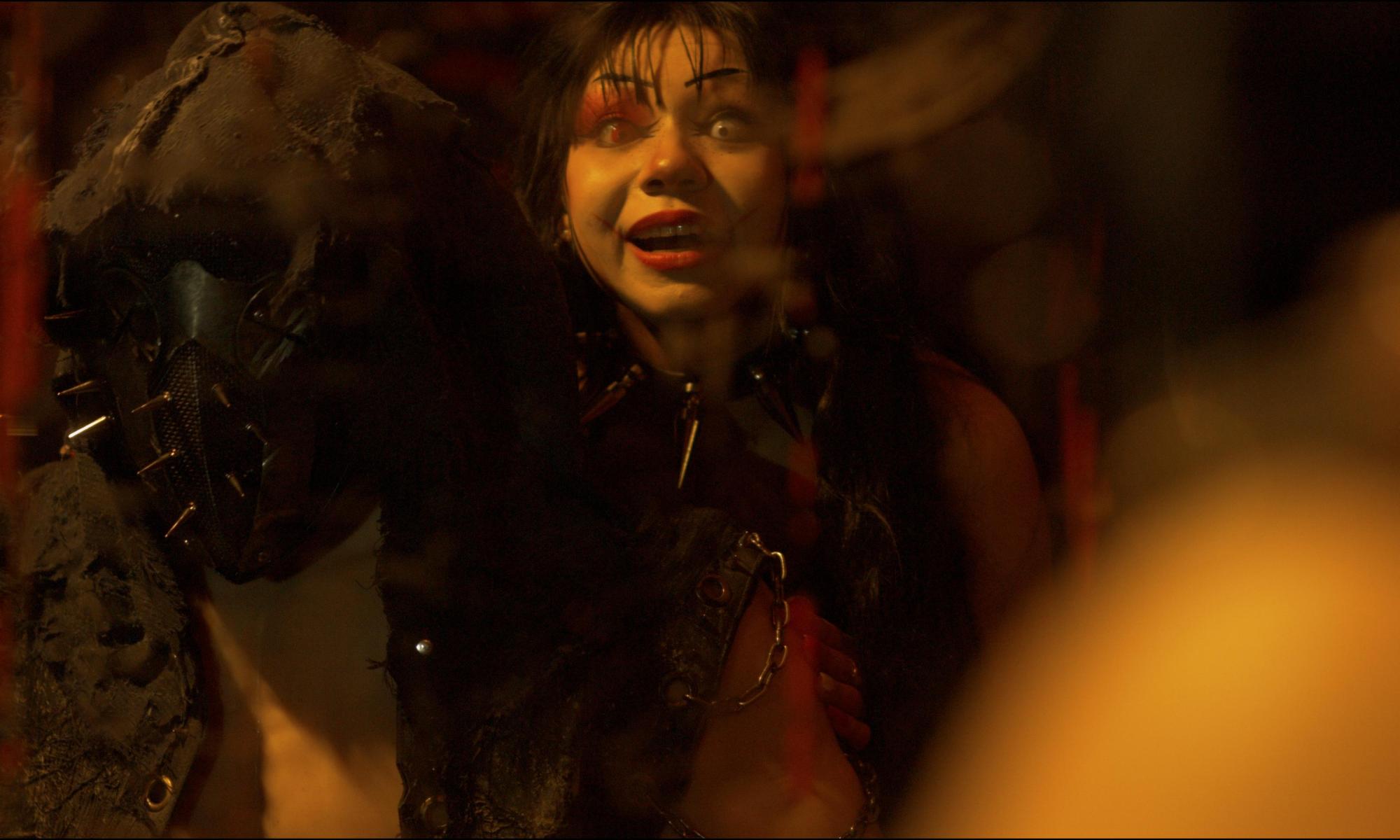
Mixing some themes from the brilliant early V.H.S. series, a mysterious VHS tape ominously labeled Violent Love delivered to Jack under the guise of jump-starting his imagination. The images on the tape are horrific in terms of torture of a young woman, sexual degradation shot in pov, male genital mutilation all of which is hinted or shown for the briefest moment. Jack is pulled into a world of hallucination, sexual depravity to a point and psychological fear. Sienna, Jacks wife struggling with her own trauma of guilt from a marital indiscretion and suicidal thoughts gets pulled into the same vortex, while a third figure, Vivienne (Canadian scream queen August Kyss), wanders in from a separate tragedy, fated to join the madness. Binding them together is the malevolent presence of the Death Dealer a masked executioner harbinger Road accompanied by leather-clad S&M demons,
The opening sequence including narration is reminiscent of Coffin Joe minus the vocal histrionics and maniacal laugh of the narrator is shocking as a victim brutalized, taunted as the decent into a type of madness the outs the horror into physical form begins
Flesh of the Unforgiven benefits enormously from its cast. Debbie Rochon brings vulnerability to Sienna, with a touch of bitterness, and a will to survive. More importantly to help the family survive while supporting Joe in his writing troubles. Weak point is she blames herself for not helping him though his troubles due her indiscretion with one of Jacks best friends. Looking at why she did not mentioned only possible blame.
August Kyss who’s role looks like it was dropped into the story works well as she shifting from grief-stricken shell to sultry siren as the Death Dealer’s influence deepens. In the film’s most harrowing sequence Vivianne applies makeup with the camera as a mirror in a moment like Demi Moore getting ready for a date in The Substance. She puts in a form fitting gown which shows her physical assets then with perfectly deadpan face pulls out a service revolver with a single tear running down her cheek, puts the gun to her head and hesitantly pulls the trigger. In The Substance, Demi Moore angerly removes the makeup because it is not who she is in this film Vivianne sadly removes herself since she can’t stand who she is .
Jack the writer, played by Joe Hollow, is more of an observer on a roller coaster ride. He tries to make sense of things with visits the local bar with one eyed bartender Michael, played by John E. McLenachan dispensing advice, black humor and shots. Moments like this brings to mind Kubrick’s version of the bar in his film The Shining make the remote cabin in a winter setting into a small version of the Overlook Hotel. Jack in this film becomes Jack Torrance in The Shining both with a wife causing him trouble and suffering from writer’s block. Taking that further you have the violence, the practical blood and maniacal giggling of demon lingerie wearing Adrianna Uchishiba becoming a smaller version of the gushes of blood in the hallway of Kubrick’s The Shining
Flesh for the Unforgiven works well in its Quebec winter backdrop—frost-coated pines and desolate cabins. The cinematography often frames characters as if trapped in small spaces which in fact are due to budget concerns. Production design makes use of practical gore effects, enhanced by CGI with some metal music often in the background of scenes. The picture detours into prolonged physical torment, while others will see these sequences as an extension of its Coffin Joe style meditation on the body as a battlefield for the soul.
In the end, Flesh of the Unforgiven is a dark, unyielding plunge into human frailty and supernatural vengeance. Influences abound from Auteur Stanley Kubrick’s revisionist The Shining, Clive Barker’s Hellraiser, hints of Canadian David Cronenberg’s body harm themes, the “Found Footage’ genre, the Saw Franchise plus owing a debt to Coffin Joe’s philosophy that horror should disturb the soul as much as the sense. Good journey for a small film doing big things
 Bloody Flicks