
By Terry Sherwood
In The Invisible Half, director Masaki Nishiyama illuminates a quiet intermittently chilling debut picture that speaks as much to being ostracized in a rigid society as it does to supernatural influences that seek revenge. This is a film similar to It Follows, Unfriend and the more extreme The Suicide Club in form, adding an intelligent, at times brilliant treatise on bullying, racialized identity within Japanese Society, and the power of technology as both a shield and a snare.
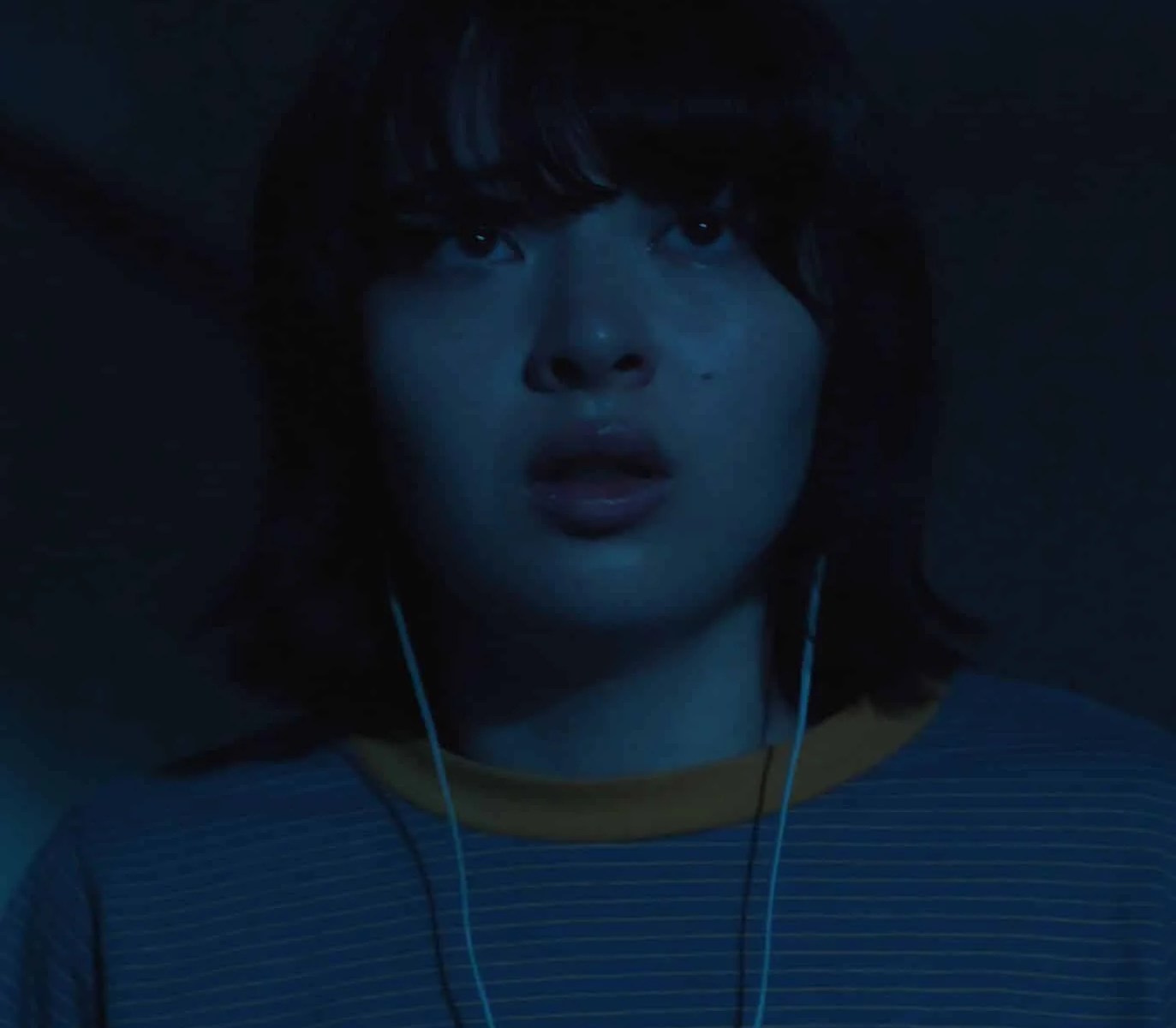
The stories center is teenage Elena (Lisa Siera) as she wakes in a hospital bed framing the idea that replays throughout the film, as she moves between states of dream, trauma, and visibility. Elena goes into her comfort zone behind a wall of ear buds or noise cancelling headphones and a mobile phone screen. mere mood-. The phone becomes an emotional crutch, a coping mechanism, and eventually, something far darker which unfortunately is true in many cases for some, the social program ‘Like’ becomes the all-important quest. What is easily posted in a chat group becomes controlling or devastating. The world becomes a video game where you can run over people, walk over a first aid pack and mend yourself without any consequence.
Returning to school as the “half-Japanese” transfer student due to her British sounding first name, Elena is met with polite ostracism and outright bullying from new classmates. What stands out immediately is the film’s portrayal of the gaijin which is slang for being foreign born in Japan —something rarely explored in contemporary horror. That prejudice extends to a name and even physical appearance, voice tone and knowing English more than the Japanese language. The Invisible Half is at its sharpest when bringing forth the quiet violence of assimilation and the helplessness of being cast as “not enough” on either side of a cultural divide.
Much of Elena’s story is filtered through digital screens and text threads. Mashi Nishiyama, himself only 25, handles this integration of tech with perceptive insight. He doesn’t use phones merely as plot devices but as mirrors—reflecting how the young relate, isolate, and attempt to survive modern adolescence. When Nyan, a fellow outcast dressed in cloaked clothes and under earbuds, enters the classroom, you get the idea of tech terror at its most extreme. Her classmates joke that she is a paranoid figure who also clings to her phone like a lifeline, the sense of foreboding deepens. Classmates joke that ‘Her parents wanted a cat but they got her instead ‘referring to her name which to them is not human. The events ramp up when Elena, herself an outsider, gets Nyan’s phone after a cruel prank,
Yes, there are clear parallels to It Follows—an unseen force passed along, a “curse” tied to intimacy, and a mounting sense of dread. Yet The Invisible Half locates its terror not in sex or sin but in the ways the female students are pushed to the margins. Unlike It Follows, the creature here has no moral reason other than revenge.
This ties into the film’s chief drawback: its pacing. The first half lingers thoughtfully on Elena’s isolation, with rich conversations about identity, mixed-race invisibility, and teenage code-switching. Yet as the horror ramps up, the film stumbles slightly. The rules of the haunting seem to take a backseat to spectral manifestations. In a different term it is like explaining the workings of a gun instead of firing it. Key relationships, like Elena’s with Akari, blossom fast which in the nature of a film world is acceptable. The central mystery, too, gets muddled never incoherent, but less impactful than it promises.
Still, the film is rich with atmospheric menace. Cao Moji’s special effects, especially during the sparingly used horror set pieces, are impressive, with shadowy presences lurking just out of frame. Creature design, interesting use of face and mask not in the J horror tradition of white face ghost more akin to the protagonist in Kuchisake-Onna or The Slit Mouth Woman. Nishiyama’s visual control is wonderful with some genuinely frightening use of long background shots with menacing figures slowly moving forward particularly in the tunnel. Sound design with silences and footfalls coupled with a slightly bombastic score at times reminiscent of Hammer Films does it job quite well. The camerawork is fluid but never showy, and the use of sound—particularly the muffled world created by headphones when you hear the click as the earbuds go on and off.
One of the most unexpectedly moving choices is the use of intertitles. These serve not merely as narrative markers but as emotional signposts—often conveying Elena’s inner thoughts or unspoken fears in the absence of direct exposition. It’s a brave and poetic tool, rarely used in modern cinema with such effect.
With all its ambition, The Invisible Half has a heart is undeniable. It’s a film about visibility—who gets seen, who gets forgotten, and how technology mediates those divides. As a feature debut, it’s impressive in theme choice, even if not every connection hits.
The Invisible Half screened as part of Raindance Film Festival 2025.
 Bloody Flicks