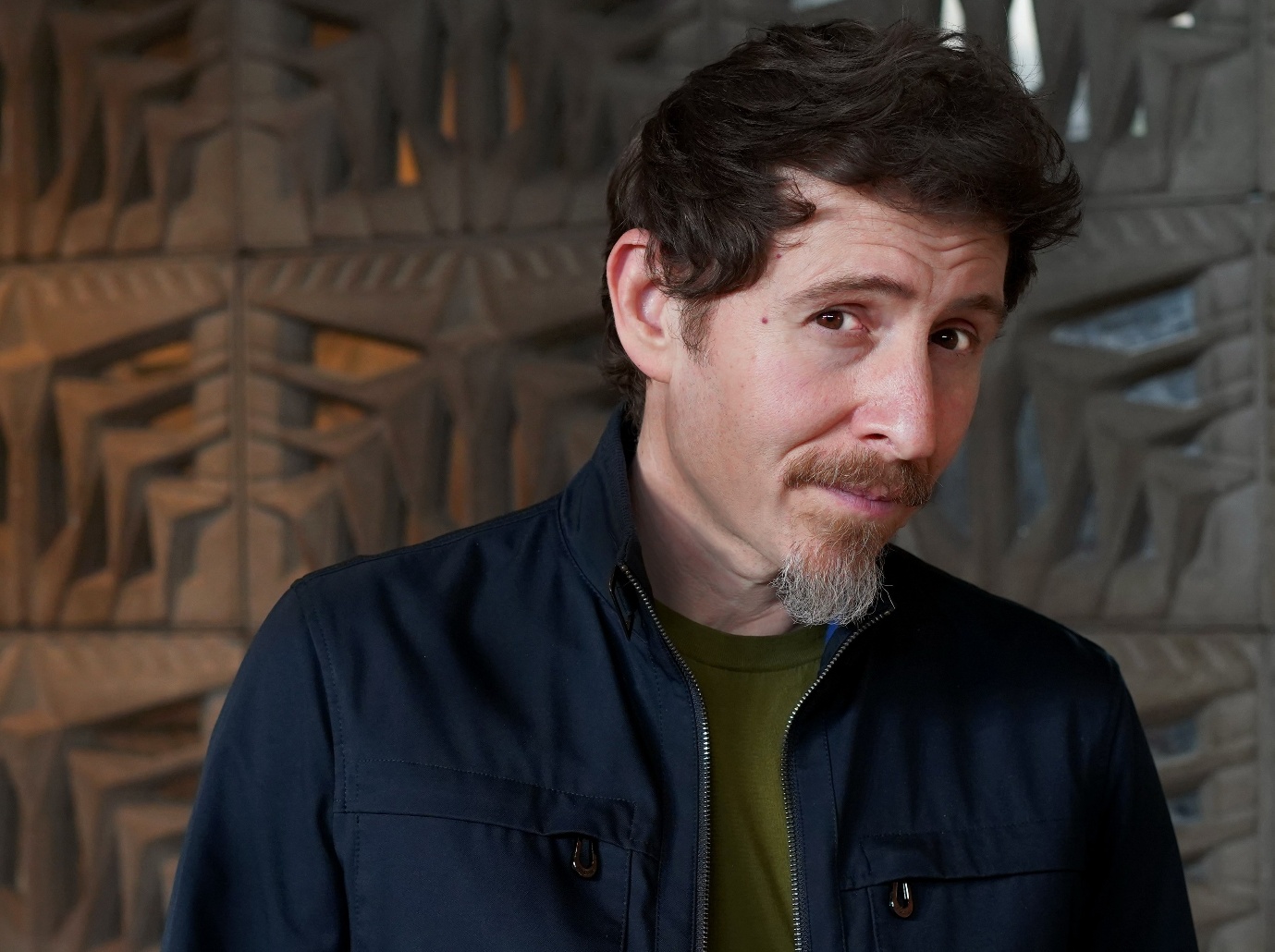

Ahead of the NYX UK broadcast of DREAD on March 29, director Anthony DiBlasi reflects on how a personal car crash influenced the film, axe murder challenges and his close relationship with Clive Barker.
Dread is based on a Clive Barker short story—what drew you to this particular tale, and how did you approach adapting it for the screen?
I was drawn to it because it was Clive’s only non-supernatural story that he’d written up till that point… maybe even his only one now. And I was very close to the age of these characters when I adapted it. I knew their voice and what they were going through. And it was most important to me that I remained as faithful to the source material as possible. I had to expand it, of course, but I wanted to make sure his themes remained constant throughout the adaptation.
The film delves into psychological horror rather than traditional jump scares. How did you build tension and dread (pun intended) throughout the story?
I kind of cheated a little, using the psychological terror as a trigger to manifest supernatural terror. But that’s something I love to do. It makes the audience uneasy when they’re not sure where a scare is going to come from. Yes, it’s still grounded in reality, but Quaid is dealing with manifestations that haunt him in the physical world. And the audience is feeling his building madness, which puts all of our other characters in real physical jeopardy.
The character dynamics are intense and unsettling. How did you work with the cast to develop such emotionally raw performances?
I think it really came from letting the cast explore their characters together. I got the whole main cast together for rehearsal sessions and we improvised scenes that were not in the film, and I’d let them grow naturally and make adjustments as the improv continued. Whispering in one actor’s ear or another to take the narrative in another direction. It’s a way I love to work. It’s improv but with real time direction and one session can go for forty-five minutes or an hour, and they never break character. I believe they carried the conflicts that were created in these sessions into the film. It became a shared history between them all.
The film explores fear in a deeply personal way. Did any of the themes or fears in Dread resonate with you personally?
I remained faithful to Clive’s story, but some characters I swapped around or created. Steven’s history in the short story became Joshua’s and Steven’s history became mine. I was in a bad car accident when I was sixteen, and had three friends in the car with me. Everyone survived thankfully, but there were some very serious injuries. So I was able to put that into the film, almost seeing Steven as a stand in for my own little brother. And then Abby was a creation, she’s not in the short story. A close friend of mine has a port wine birthmark and it was always a part of her social experience growing up, so I thought that was a perfect way to represent dread in a physical form. Dread from how people see you just by walking into a room. Abby carries that every moment of her life.
The movie has a very stark and unsettling atmosphere. What choices did you make in terms of cinematography, lighting, and sound design to enhance that mood?
Well, I had an incredible DP on that film. Sam McCurdy who had shot The Descent,
and went on to win an Emmy for Shogun. And we settled on this look that he described as being ‘Nicotine stained’. We also shot on the Viper camera, a camera not in use anymore, which in itself makes it unique for the time.
What was the most challenging scene to shoot in Dread?
It’s hard to say, all these years later. I only have good memories of the experience. But I know the axe murder scenes were very technically challenging, because I wanted this huge camera attached to an axe. And there was a giant rig built to accomplish that, so we could get that full pendulum swing of the axe through the air. It was like a twenty-five foot rig that had to be built to get that natural swing. The whole house was a build, thankfully, so it could accommodate the rig inside it. Also, when we dragged the axe, the camera is attached and that was a separate rig, that had to be carried up the stairs while attached to the axe. Now it’s easy to do those kinds of things, you can get tiny cameras to do it. Unless your Nolan, who would still probably attach an IMAX camera to an axe if he wanted to.
You’ve worked closely with Clive Barker on multiple projects. What do you think you’ve learnt from collaborating with him? Any favourite memories?
Well, it was an honor to learn from him, his mind is vast with creative knowledge and inspiration. That was a solid ten to twelve years of my life, and it thankfully continues now. Most of my favorite memories with Clive are outside of film, having travelled with him around the US for his book tours in my early days and getting to see him interact with his fans and how he poured so much energy into each person he would meet. That humbles you as a creator, to see how gracious he is with his fans.
What’s your philosophy on what makes a truly effective horror film?
It’s a bit of a magic trick really. It comes from the gut, I guess. And you also have to realize what scares or entertains some will not scare or entertain others. I don’t scare easily. Ghost stories can get under my skin more than anything else, so when I’m trying to terrify the audience, I can’t really use myself as a barometer. But what I like to do is to puppeteer emotions. If I can break down social boundaries and instigate some fun or drama, I’ll do it. It’s just who I am. It’s the Gemini in me, I guess.
Horror audiences in the UK are big fans and Dread premiered at FrightFest. Tell us one of your favourite memories of the experience?
Well it was getting to watch it in the biggest theater I’ve ever stepped into with an audience at the Empire in Leicester Square. That was a monumental experience to be there with the cast. And for most of the cast it was the first time they were seeing it, which I just loved. Being able to watch them watch the film for the first time at FrightFest is something I’ll never forget.
You’ve directed a mix of psychological and supernatural horror (Dread, Last Shift, Malum). Do you have a preference, and how do your approaches differ?
I enjoy both really. I like unraveling characters in a screenplay slowly. I think it all comes down to how you can get an audience to perceive terror both on the screen and on the page, so both sub genres are really rooted in psychology.
Finally, what projects are you currently working on?
Clive and I have actually stepped into to developing something else together, so hopefully that will be announced to the world in the coming months.
You can watch DREAD on NYX UK on Friday, March 29, 11.15pm.
 Bloody Flicks