
By Terry Sherwood
Elric Kane’s The Dead Thing is a haunting exploration of modern loneliness, the hollow allure of hedonism, and the spectral nature of contemporary relationships. At its core, the film is a chilling metaphor for the emotional and psychological toll of disposable dating culture, where connections are fleeting, intimacy is transactional, and the pursuit of pleasure often leads to self-destruction. Drawing on themes from classic horror and psychological thrillers like The Demon Seed and Looking for Mr. Goodbar, Kane crafts a story that is as much about the terrors of the human condition as it is about the supernatural.
The film centers on Alex, a tech worker played with striking vulnerability by Blu Hunt, who is trapped in a cycle of monotony and empty encounters. Her life is a series of repetitive motions: work, swiping, dating, and fleeting sexual gratification. The film’s opening scenes establish Alex’s detachment from her own existence, as she moves through her days with a mechanical numbness. Her interactions with men are devoid of emotional depth, and even her moments of physical pleasure feel hollow, underscored by the eerie image of her sitting under a UV light, recharging like a personal pleasure device. This visual metaphor sets the tone for the film’s exploration of modern alienation
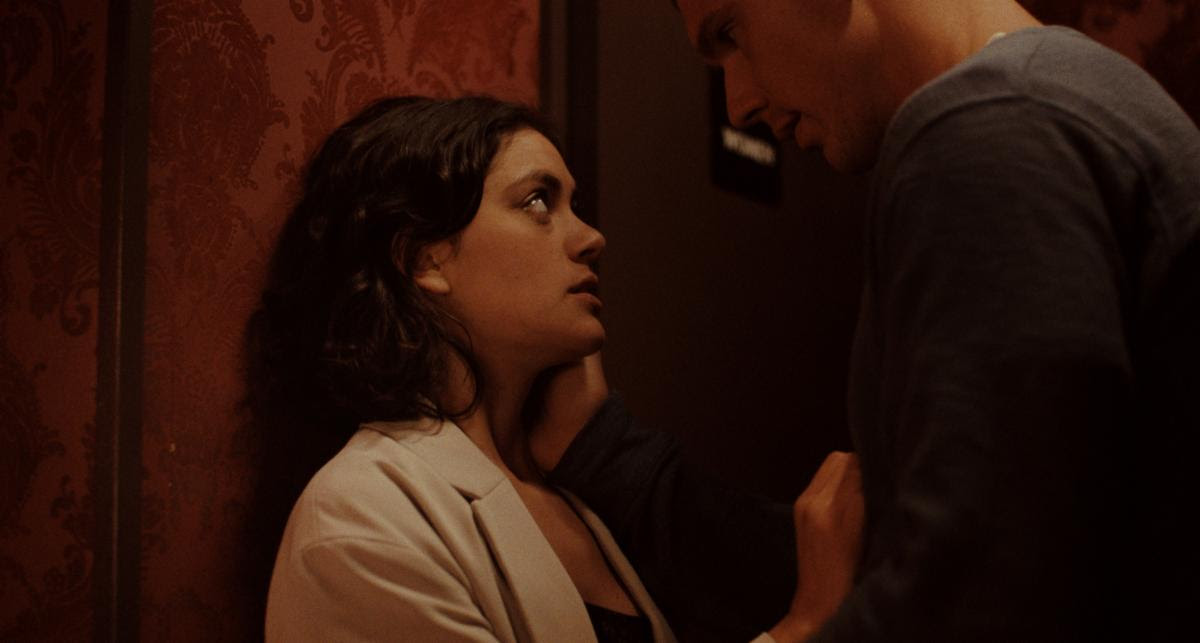
Enter Kyle, played by Ben Smith-Petersen, who initially appears to be a breath of fresh air in Alex’s sterile world. His dating profile, featuring a cat, suggests empathy and warmth, qualities that Alex—and many women in the digital dating pool—crave. Yet, as their relationship unfolds, it becomes clear that Kyle is not what he seems. He is a ghost, both literally and figuratively, a manifestation of Alex’s deepest desires and fears. Their connection is intoxicating, but it comes at a cost. Kyle’s presence begins to consume Alex, isolating her from her friends, her sister (played by Katherine Hughes), and even her own sense of self. The film deftly explores the idea of possession, not just in the supernatural sense, but as a metaphor for how toxic relationships can erode one’s identity.
Kane’s direction is stylish and deliberate, with a focus on sparse interiors and muted colors that reflect Alex’s inner emptiness. The cinematography, particularly the close-ups of Hunt’s expressive eyes, draws the audience into her emotional turmoil. Her performance is the film’s anchor, conveying a wide range of emotions—pleasure, despair, longing, and terror—with subtlety and depth. The scenes where she wears sunglasses, shielding her eyes from the world, are particularly striking, as they underscore her attempts to hide her vulnerability even as she succumbs to Kyle’s influence.
The film’s horror elements are understated but effective. Kyle’s ghostly nature is revealed gradually, through eerie text messages and unsettling encounters. The tension builds as Alex’s obsession with him grows, culminating in a climax that is both tragic and terrifying. The film’s title, The Dead Thing, takes on multiple meanings: it refers to Kyle, to the lifeless nature of Alex’s existence, and to the emotional deadness that pervades her relationships. In the end, Alex’s journey is one of self-destruction and rebirth, as she is forced to confront the emptiness at the heart of her hedonistic pursuits.
What sets The Dead Thing apart from other horror films is its critique of modern dating culture. The film captures the paradox of living in a hyper-connected world where genuine connection is increasingly rare. Alex’s loneliness is palpable, and her descent into obsession with Kyle reflects a broader societal malaise. The film suggests that in a world where relationships are mediated by screens and algorithms, we are all vulnerable to being haunted by the ghosts of our own desires.
The cast delivers restrained yet powerful portrayals. Hunt’s Alex is a complex and sympathetic protagonist, while Smith-Petersen’s Kyle is both seductive and sinister. The supporting cast, particularly Hughes as Alex’s sister, adds depth to the narrative, highlighting the ways in which toxic relationships can ripple through families and friendships.
In the end, The Dead Thing is a thought-provoking and unsettling film. It is a meditation on the “strangest passion”—the ways in which love, desire, and loneliness can lead us into dark and dangerous territory. Kane’s film is a reminder that the most terrifying monsters are often the ones we invite into our lives, and that the pursuit of pleasure can come at a terrible cost. For anyone who has ever felt the sting of a mismatched connection or the ache of unfulfilled longing, The Dead Thing is a haunting mirror held up to the modern soul.
The Dead Thing arrives on Shudder from 14 February 2025.
 Bloody Flicks