
By David Dent
Daniel Kokotajlo’s debut feature, 2017’s stunning Apostasy, dealt with a crisis of faith facing a Jehovah’s Witness mother. Faith of a very different kind is at the heart of his latest film.
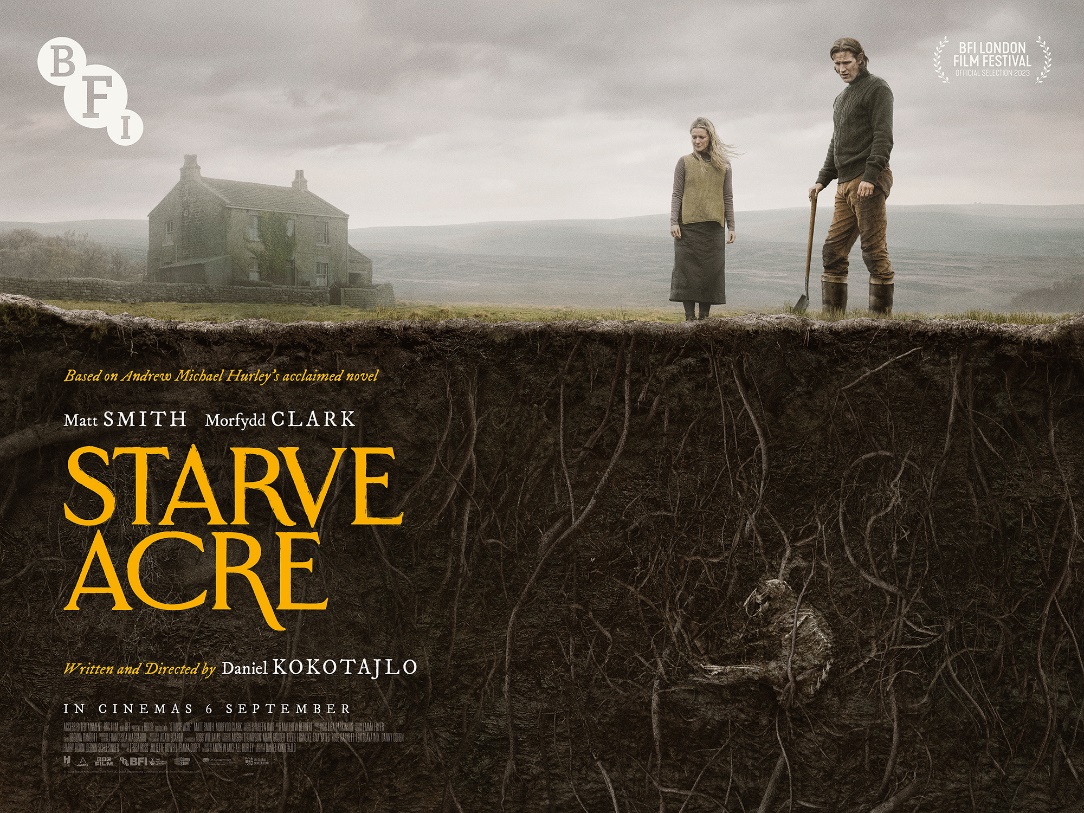
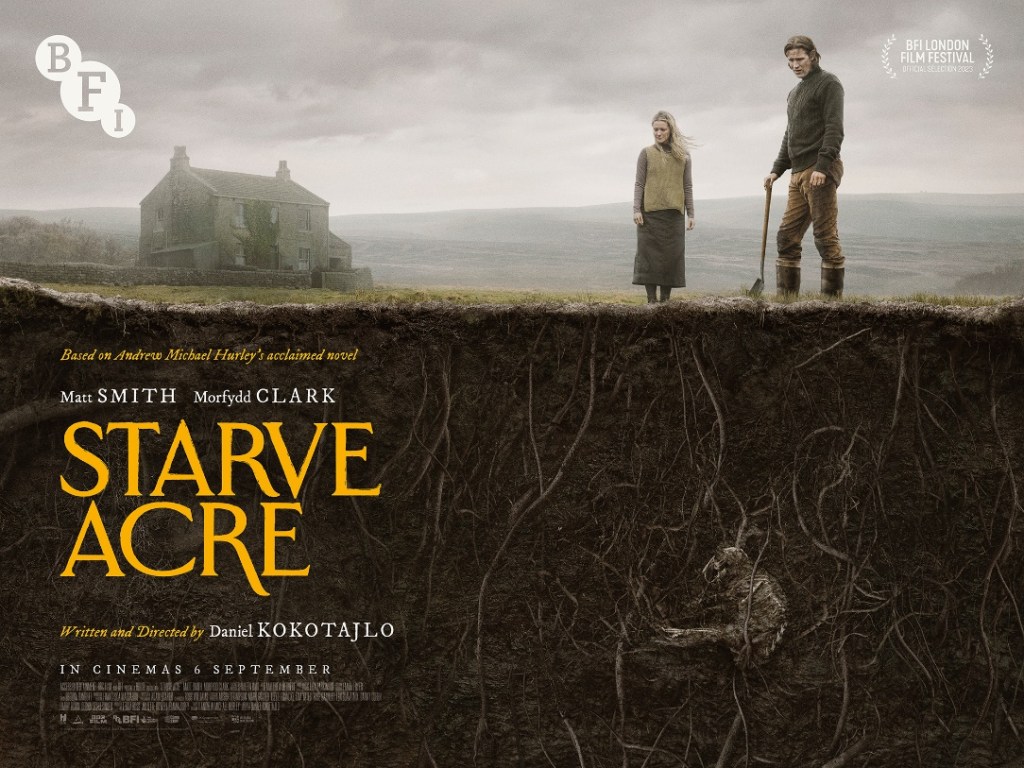
Richard (Matt Smith), a teacher and archaeologist, and his partner Juliette (Morfydd Clark), live in rural seclusion, at some point in the early 1970s. Their young son is a troubled soul; as the film opens he has blinded a horse and his sleep talk is full of references to a character called Jack. Richard is concerned that his child may have learned this by listening too much to the folklore ramblings of his neighbour, Gordon (Sean Glider).
One day when Richard is at work in the school where he teaches, Juliette experiences something overwhelming when outside; in a possibly unrelated tragedy (although everything in Starve Acre is connected) at the same time her son dies, unaccountably. The death drives a wedge between the two parents; Richard seeks solace in archaeological digs, uncovering and bringing home the skeleton of a large hare, whereas Juliette seeks the comfort of her practical sister Harrie (Erin Richards).
Richard’s discovery of journals kept by his father Neil, entitled ‘Starve Acre’ and containing details of ceremonies in which Richard thinks he was forced to participate, brings about something miraculous. Quite how much of what follows is the result of genuine magick or the mental state of two deeply traumatised people is never made clear; but Richard and Juliette find a way to heal their wounds and celebrate the cycle of existence.
It’s a bold move for Kokotajlo to venture down the road of f*lk horror, and his movie can’t help conjure up memories of films like Ben Wheatley’s In the Earth from 2021, Mark Jenkin’s 2022 movie Enys Men, and also 1970s genre TV, specifically the ‘Baby’ episode from Nigel Kneale’s Beasts TV plays all the way back in 1976.
Also familiar are the cultural signposts – woodcuts, scenes of rural desolation, scratchy soundtrack (from Matthew Herbert) – that the film threatens to become overfamiliar very quickly. But it’s saved from that fate by superb performances from Smith and Clark as the couple who lose everything but learn to recover their love, and the sheer level of care lavished by the director in creating a hermetically sealed world which may increasingly seem unhinged but remains totally plausible to those involved. It’s a haunting little bit of cinema and I liked it a lot.
 Bloody Flicks