

By David Dent
The debut feature from Sophie Osbourne, ‘The Monster Beneath Us’ is set in the Yorkshire of 1989 and stars Becca Hirani as Lady Grace Abbington, a woman who has returned to the family seat of her husband James (Jack Forsyth-Noble), Dolorige Manor, following his untimely death.
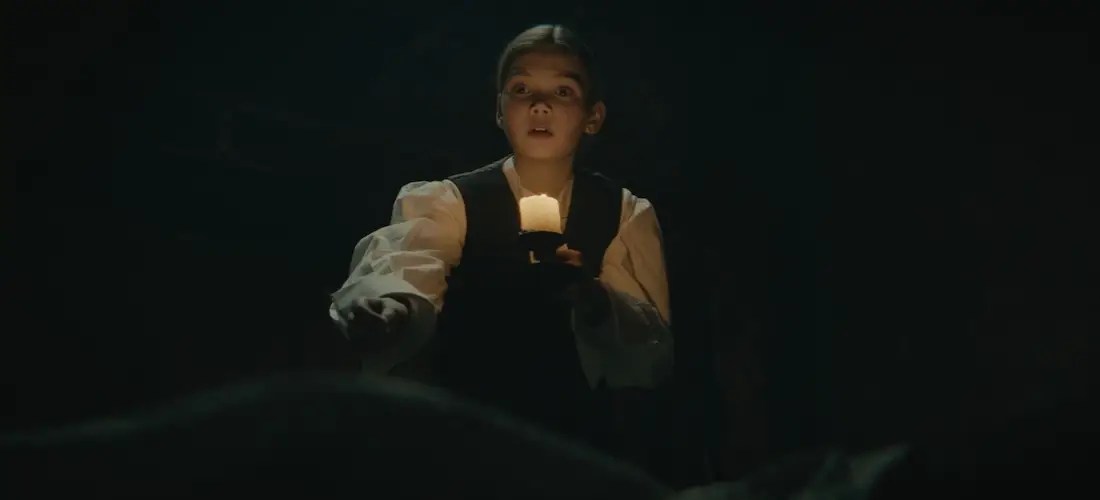
Grace is accompanied by her androgynous looking son, Charles (Marshall Hawkes) who is to be home tutored as mama can no longer afford boarding fees. Her late husband dismissed all the servants before his death, so the only person assisting the widow is Mrs Gray (genre regular Nicola Wright).
The house is large and drafty, and Grace is keen to sell the place as quickly as possible, much to the annoyance of Mrs Gray. But Charles starts to get his feet under the table, spending a lot of time in the building’s cellar (annoyingly referred to as a ‘basement’ in one of a number of rather modern phrases which ruin the period atmosphere for a bit).
Grace however, still in the first stages of grief, feels uneasy at the manor, not helped by her isolation and visiting relatives like James’ mother Esme (Sue Kelly) who holds Grace responsible for the family’s straitened circumstances.
But as the story progresses there’s something darker at work; the cellar contains a demonic beast – a Boggart apparently (a nice bit of CGI from the India based Lumapix Creatice Studios) – who subtly befriends Charles before finally showing its true self.
Osbourne’s slow burner really pushes the definition of that term, clocking in at an hour and three quarters, with very little happening for most of that time. On the plus side the film looks sumptuous; the director wisely chooses not to drown the thing in an oppressive soundtrack; the location of the house in Yorkshire – Crayke Manor – and the fact that the movie was shot in winter adds considerably to the gothic atmosphere.
On the downside, Becca Hirani isn’t really a strong enough actress – or miscast in the role, it’s difficult to tell – to carry the film, making the piece feel additionally static. There’s a requirement to build up the tension, in great Henry James tradition, and this doesn’t really happen (although the finale gets up a head of steam). Hirani is all over this film (Rebecca J. Matthews – Hirani’s behind the scenes persona – is present and correct on a few credits) and there isn’t really much room for anyone else as the focus.
 Bloody Flicks