
Across all of film, the best actors rely on their eyes to tell the audience and other characters what the script won’t let them. In horror, however, eyes become a distinctly useful tool for the genre. You could look to the gore of having one’s eye removed or the ever-creepy colour turn. Whether it’s to go pitch black, to change to a reptilian-style yellow, or to just remove the pupils entirely, altering the eyes leaves a distinct image in the mind.
Now, this isn’t just a bit of aesthetic shock horror. When deployed well, it can tell the viewer a lot about what’s going on. Whether it’s in the masterfully tense Gonjiam: Haunted Asylum, the excellent modern possession horror Talk to Me, or even Jessica Alba’s The Eye and its unforgettable marketing, when the eyes change, the audience gets drawn in. As it happens, we’ve been scared of eyes and the evil they can bring for millennia.
A History of Eye Fear
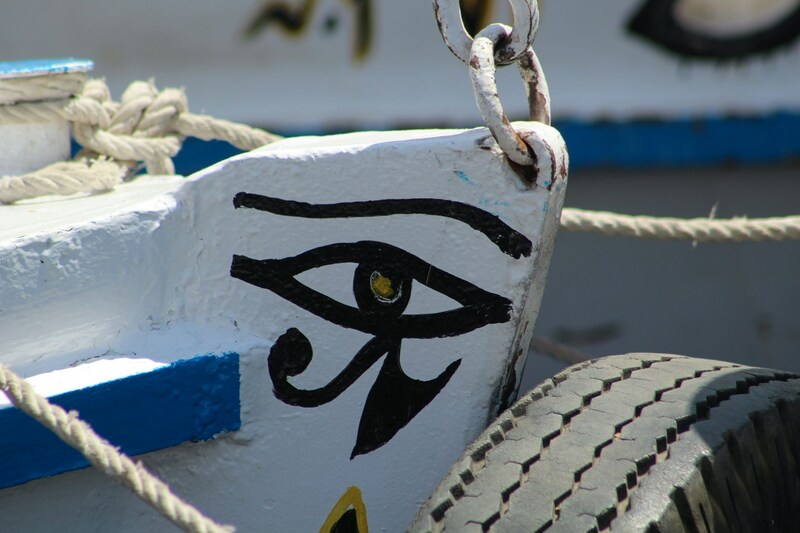
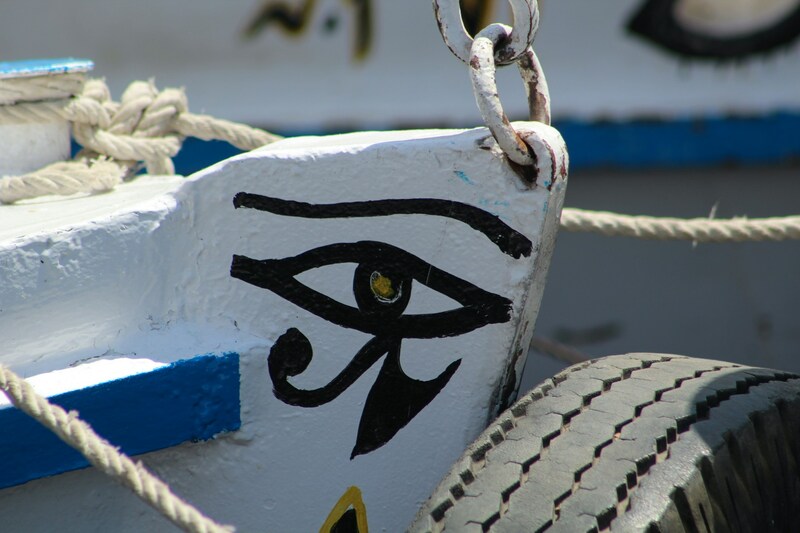
The eye has played both the protector and the bringer of evil in historical symbology from around the world. They often take two forms. One is the Nazar eye amulet that wards off the true evil eye. The other can be just about any eye anywhere, but regularly gets tied to some kind of monster or demon, like Medusa in ancient Greek mythology. Usually, the evil eye is one of envy and jealousy.
Those who are successful must be wary of the envious evil eyes around them. Still, many do suspect several eye pendants unearthed from history to be of the evil eye. The prime example is the Eye of Horus. The Wadjet pendant, as it’s also known, is actually buried with pharaohs to protect them in the afterlife from the evil eye. It’s why in Megaways casino games, the Eye of Horus game and its top symbol are both showcased as paths to glory.
Application in Horror Entertainment
With this historical context, it’s easy to see why creatives in horror like to toy with the eyes when evil lurks. Poltergeists, spirits, and demons are often depicted as covetous, greedy, and seeking either what they never had or what they lost in life. So, taking over the eyes of the innocent to visually show the evil eye, as it were, is a great way to reflect that which we can almost innately get on board with. After all, people don’t wear a Nazar anymore.
Also helping our acceptance of this phenomenon in horror movies are actually some Bible verses. In the Gospel of Matthew in the New Testament, 6:22 reads that “the eye is the lamp of the body,” and if it’s bad, your whole body must be filled with darkness. We can see this taken very literally in the films mentioned above, as well as in classics like The Exorcist and An American Werewolf in London. When the window into our souls is dark, so are our souls.
When used as part of a possession or some kind of evil change in a character, it’s the eyes that offer the most potent telling of that transition. Humans are very familiar with the evil eye, so we know exactly what it means when our main character’s turn pitch black.
 Bloody Flicks