
By Simon Thompson
Writer/director Douglas Roos’s Bakemono is one of the most startlingly original, daring, and well-crafted horror movies I’ve watched in the last few years.
What sets Bakemono apart from many other films in the same genre, is that the narrative is an exploration of modern urban Japanese life, with the majority of the characters being Japanese and played by Japanese actors speaking their own language, yet it’s made by an American director who, as far as I’m aware, has no Japanese heritage but still manages to give the audience a perspective of Tokyo that feels like it’s coming from a Tokyoite rather than a foreigner.
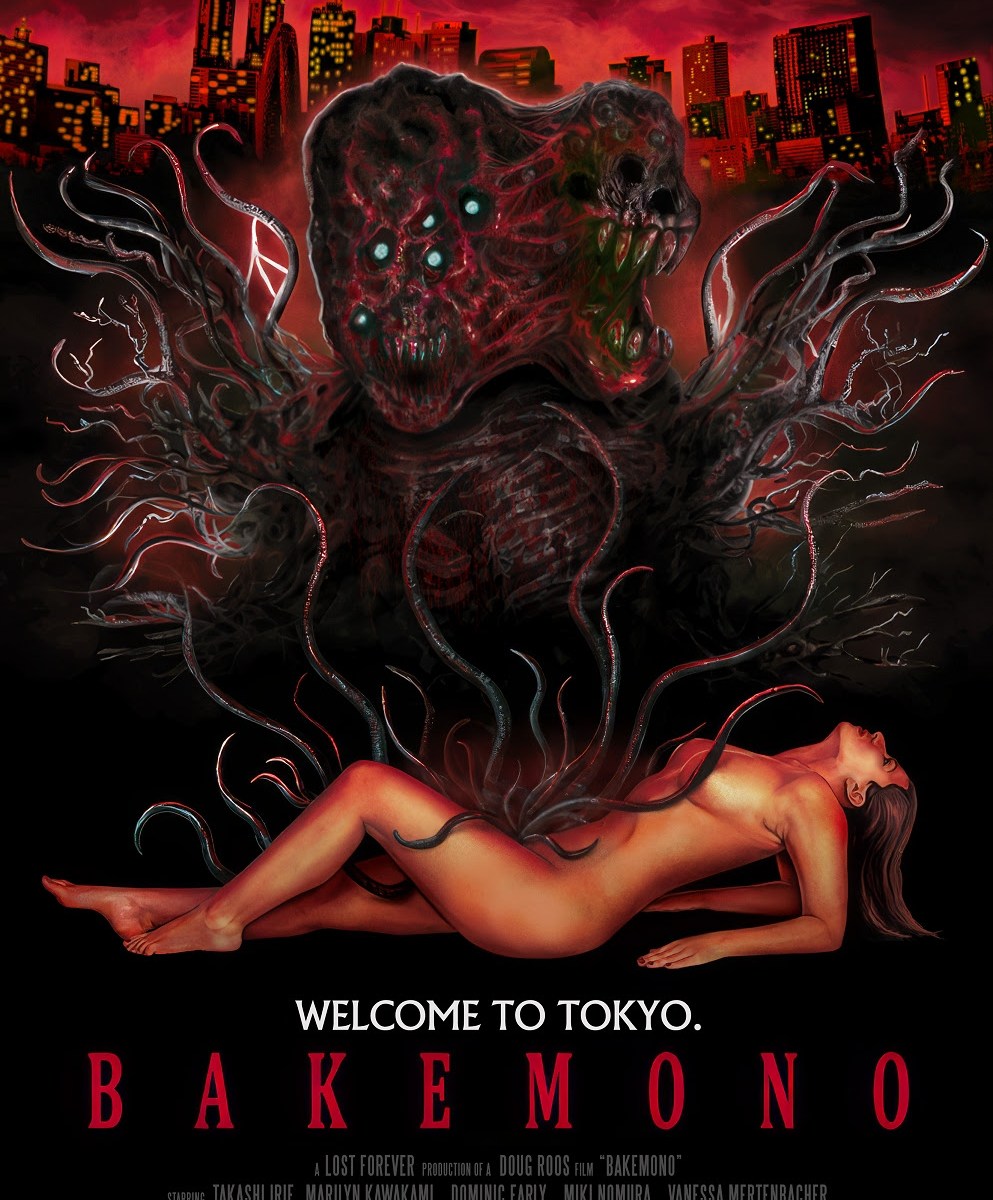
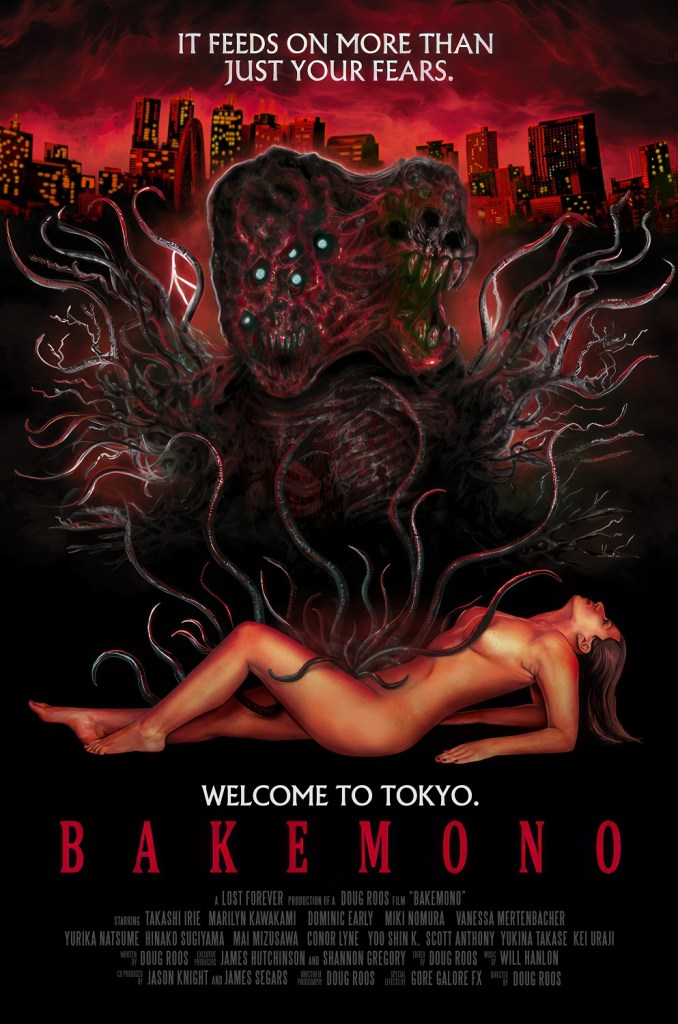
The plot of Bakemono follows the lives of various guests inside a cheap Tokyo accommodation. While it seems like your normal cheap and cheerful Airbnb at first, it houses two dark secrets. The first secret is that the landlord Mitsuo (Takashi Irie) has more skeletons in his cupboard than a small boiler room set headlined by Jack Skeleton and Soul King Brook. The second secret is that the place is haunted by a Bakemono, which roughly equates to a phantom or goblin in English, that is going around horrifically mutilating the guests.
Stylistically, Bakemono can best be described as a unique amalgamation of both Western and Japanese horror. Its J-horror qualities can be seen in its tight camera angles and creation of a prevailing sense of dread and despair in mundane everyday urban environments, evoking Japanese horror classics such as JU-ON, Cure, Perfect Blue, Paranoia Agent, Audition, Dark Water, One Missed Call, and Tetsuo The Iron Man. Bakemono’s themes and exploration of urban alienation and the isolation that comes from living in a rapidly expanding mega-city provide it with much common ground with the works listed.
Its Western qualities, however can be seen in both the creature feature style design of Bakemono itself and the kills which give Bakemono a strong slasher movie quality, a sub-genre of horror that I would describe as being distinctly American. The Bakemono in this movie is terrifyingly rendered through absolutely spectacular Rick Baker and Stan Winston- like practical effects, which give the Bakemono a more palpable and visceral quality than CGI ever could. This makes the kills depicted in the film just that little bit more chilling because of both the make-up and how realistically the Bakemono moves around.
To conclude, Bakemono is a beautiful mix of the best qualities of both Japanese and Western horror movies. Roos manages to balance both a quieter atmospheric style of horror with spectacular gory kills yet not have the inclusion of both come across as tonally dissonant. While Bakemono does have some flaws with its story structure in places, its strong visuals and creativity more than makeup for those flaws and definitely make this movie worth a glance.
 Bloody Flicks