
Ahead of its screening at Arrow Video Frightfest 2022, we caught up with writer/director John Ainslie to talk all about narcotic nightmare Do Not Disturb.
What can you tell us about Do Not Disturb?
Do Not Disturb is a psychedelic exploration of love, lust and carnal desire.
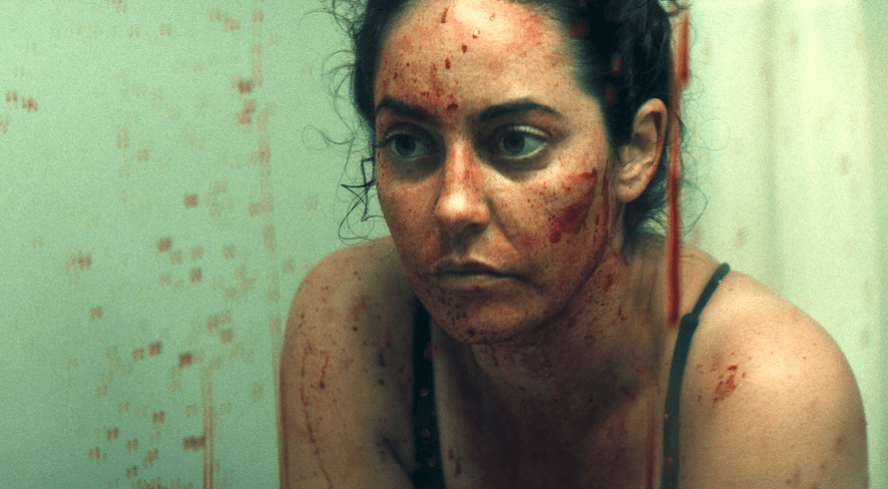
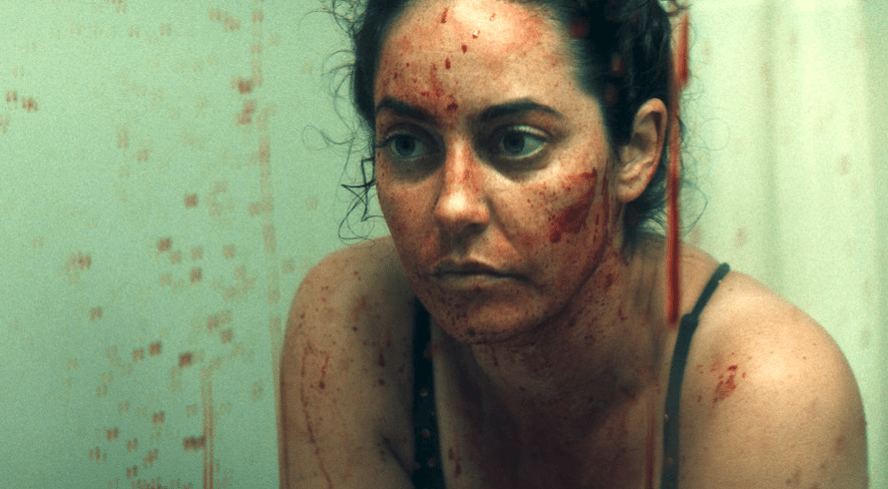
It’s about a couple who head down to Miami for their honeymoon and decide to explore peyote. They end up mixing it with all sorts of other narcotics and lose all sense of time until they sober up and find a half-eaten corpse under their bed. At its heart, it’s a relationship film that explores how toxic relationships eat us alive using cannibalism as a metaphor.
I wrote the original draft to this film almost a decade ago and had multiple opportunities to make it that all fell apart. It was a difficult film to get made and there were times when I thought it would never happen. Thankfully last year I was able to get it to the camera with a great group of executives who basically just trusted me to make the film I wanted to make and really supported me.
Did you watch any cannibal movies as part of your research?
I did rewatch Eli Roth’s The Green Inferno while I was editing and I made sure to check out Fresh when it came out, but most of the cannibal film references came as I was in the writing stage. I originally wrote the film a couple years before Raw screened at TIFF and I had spent the previous year pitching Do Not Disturb and being told by everyone in Canada that no one would want to see a cannibal movie. So, it helped to have Raw at TIFF to point to and say, look, there is value to cannibal films. It is possible to find a story that people will connect to. Obviously, Trouble Every Day by Claire Denis was a huge influence. And then of course my favourite film of 2016, Bad Batch by Ana Lily Amirpour was a visual and tonal influence for sure.
We’ve seen different portrayals of cannibalism recently with Raw, is Do Not Disturb another film that will subvert tropes?
In many ways Do Not Disturb isn’t plotted like a typical horror film, whatever typical means, but it doesn’t have any jump-scares, there is no suspense in the traditional fashion and there’s no real blood for the first hour… and yet the film seems to work. I mean, the film opens with an almost mundane relationship story and transforms slowly into the bizarre as we go, but I like to start out “normal” and let the viewer sort of drift into the freak naturally. I think it triggers empathy with the characters rather than just observing a spectacle.
I do like to rely on familiar plotting and structure devices. It saves you a lot of screen time when you don’t have to plant things into the viewer’s minds because they just inherently know something or at least feel they do. More than horror tropes, this film plays with traditional gender-role tropes and expectations. It’s fun to play with that and flip what they think they know upside down. People find the comfort of the familiar and when you can subvert that and make it something to fear I think it really freaks people out.
The film also explores a toxic relationship, how did you juxtapose this with the horror?
Toxic relationships can be pretty horrific. Mixing the horror with the relationship was the key to finding the real heart of this film in many ways. When I was pitching the film as a “cannibal sex-fetish” film most people just ran away from the idea, but I noticed that people really responded to the relationship allegory. That being in a toxic relationship was similar in a sense to being eaten alive. Just about anyone I pitched that to latch onto that as a concept.
The film plays out in a pattern of the same basic sequence of scenes repeating and escalating. Similar to an abusive relationship where the abused forgive an abuser for their actions, but then the same cycle plays out over and over again. I wanted to structure the film that way until Chloe breaks that pattern. She can’t change Jack, she can only change how she reacts to Jack and when she can’t get Jack to leave she decides to eliminate him from her life… by consuming him. He has been consuming her emotionally for all those years and this is a very primal, almost natural way to reclaim herself. From her point of view, cannibalism isn’t necessarily horrific, but euphoric. By the end of the film, she has found her agency.
I will say that when we were filming every time someone asked me what the film was about the men would laugh the premise off nervously, but almost every woman seemed disturbingly delighted when I told them it was about a woman who grew tired of her husband’s man-child shit and eats him alive. Like, I got a few high fives from women…
How key was casting for the film?
Casting Do Not Disturb was a huge challenge. I needed a lead who was a strong enough actor to just make Chloe her own and embrace this complex role. For Jack, I needed someone who the audience could sympathise with initially so you understand that at some point it made sense that she was with him, but then have no trouble shifting to wanting him dead.
As a writer, you build the characters, but you have to hand them off and let the actor bring the character to life using a combination of your script and their own experience. As a director, the cast are your creative partners and so you need actors whose instincts you trust. You always want to be challenging each other and answering and asking a lot of questions all the way through prep so when you arrive on the day it just flows. There were no long discussions about it on set. Most of the time I would just wander over to Kim and ask her how a take felt and 100% of the time we would agree it felt right or wrong and we would roll another or move on. There wasn’t really much to talk about at that point because we were just in sync on where we wanted to go. Usually, it’s just about clarifying or reinterpreting the intention behind the words.
We had no budget for a casting director, but Rechna, our producer and I, do have a lot of friends who are actors so we figured we could handle it on our own. That said, I wanted to make sure I saw people I wasn’t familiar with so we put out an open call. Or tried to.
I don’t know if it was because of Covid or what, but when we wanted to start casting we were told we were starting way too soon and to wait for two weeks before we went to camera, which just wasn’t an option for me. The actor union in Canada took two months to read the script and approve us and so maybe, 80% of the agents could not submit, including actors who, I also personally reached out to. As a result, we received thousands of self-tapes from non-union actors who I couldn’t even hire. I still watched every tape that came in, just in case which likely wasn’t my best use of time, but who knows what you might find, right?
In the end, I had a small number of submissions to choose from and we had a few actors take issue with the script for whatever reason, so that also limited the choices, but in the wrong hands this could have been a pretty gratuitous film so I respect that they had hesitations with the material.
So, feeling kind of lost I started just cruising IMDB and casting workbook and my Instagram feed, which is basically just a list of actors I hope to work with one day and saw Kimberly. I reached out to my agent and asked who repped her and it turned out we share the same agent. My only interaction with Kim previously was an industry party a few years ago, where I was broke and standing at the bar lost. She emerged from the crowd, looked at me as she ordered and I nodded and she bought us two shots of Jameson. We drank them and she then walked away without saying a word.
My agent sent Kim the script and after she read it we spoke on the phone for about 3 hours about our lives and our past relationships, stuff that related to the film, but we didn’t really talk about the script much. I had already seen her reel and knew her work pretty well to know that she was a very strong talent. So once we spoke and clicked so well, I immediately knew she was the one. I didn’t even watch her self-tape until much later.
I loved every second working with her and really hope we can do it again. I’m writing something for her now actually.
Horror films always sound the most fun to film, what can you tell us about life on-set?
We shot during Covid so there was a lot less hugging than usual. I love being on set in general. It’s the only place in the world that I really feel at home. Everyone has a role and purpose and comes together for a short period of time with one common goal. It’s really great when that is working.
This set was special because my wife was producing so we were able to have this time together. We shot the bulk of the film in a hotel in Northern Toronto and were able to get a suite for my parents so they could watch the kids while we filmed. The rest of the film was shot in Miami where we live so it was great to get to know the city like that. Shooting in Miami was amazing and the people were so welcoming and enthusiastic compared to Canada where so many things are filmed that it seems like drudgery almost because there seems to be a shoot on every corner backing up traffic and pissing people off.
The best thing about horror films is the blood and when those gags work, they are very rewarding, but the hours you stand around waiting for the blood gags to be ready can be a drag. Thankfully we had a really super AD Stephen Clark who was great at keeping us working while we waited. But blood is always fun. Until the hotel calls and says they can’t get the stains out and we have to replace the carpet. But that sort of goes with the territory. You see a lot of lower-budget films shoot in close-ups to protect the set, but I like wide angles… I’m paying for all that blood, I want to see it, you know?
Working with Cinematographer, Scott McIntyre was really a great experience. He and I really saw things the same way and he added a lot to the style and really probed me with the right questions. He and I were disappointed with how safe we had played it on our previous films. So, we agreed from the start that if there was a most extreme way to film a scene that is what we would try first. That philosophy seemed to translate across the board and made the entire production super fun.
Can we expect any darkly comic relief in Do Not Disturb?
That depends on your sense of humour, I guess. The UK seems to be really getting it and finding it quite comedic in all the right ways. The US too has latched onto the absurdity of it. I haven’t had a chance to get much feedback yet from other areas of the world, but I hope they love it too! I grew up on a steady diet of B-Horror films and Monty Python so I guess it only makes sense that I would mix comedy and horror together.
The challenge with Do Not Disturb at the script stage, was making people understand how funny it was intended to be and how absurd the gore was. It is a horror film that happens to have a rather serious relationship drama going on and I didn’t want to distract from that. There are scenes that jump from almost slapstick humor to darkly serious and back again in a matter of seconds. Those scenes make you nervous while filming, because they are very difficult to make work, but the cast really got it and really committed to the tone so I feel like it works really well.
We all kind of bought into the idea that this is a smaller budget film and this is where you can afford to take chances – so take them! People can get bogged down by definitions and categories, “you can’t do this, you can’t do that” – because we know that the best art is always produced with strict adherence to rules… fuck it all, just try shit and see what works. Do what you want or at least what they let you get away with. You have to block all the voices and expectations out of your mind and just focus on what your instincts tell you. Trust your voice and trust the process.
Blockbuster is dead, there are no isles that categorize your film anymore. Just a seemingly endless stream of thumbnails to get lost in. Do your thing and stand out!
Do Not Disturb screens at Arrow Video Frightfest 2022.
 Bloody Flicks